Vatican
Home Page
Previous Page
Next Page
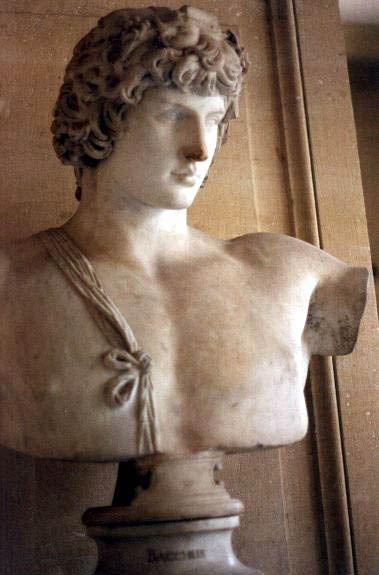
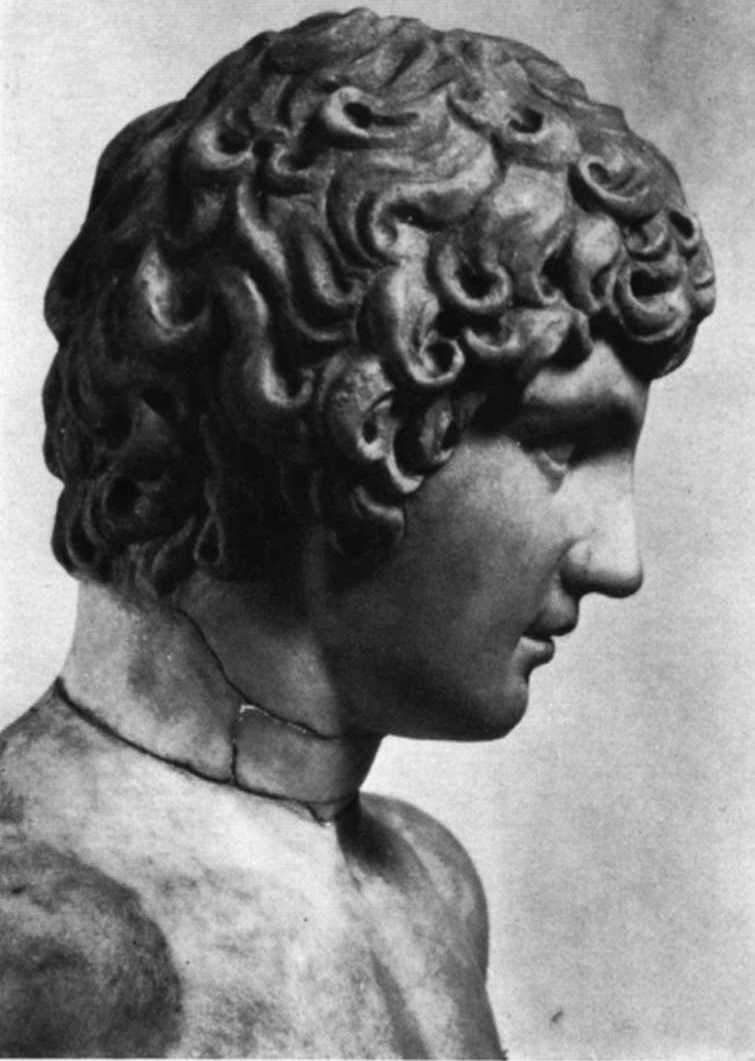
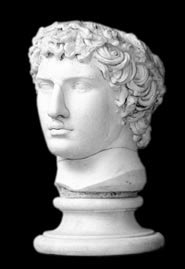
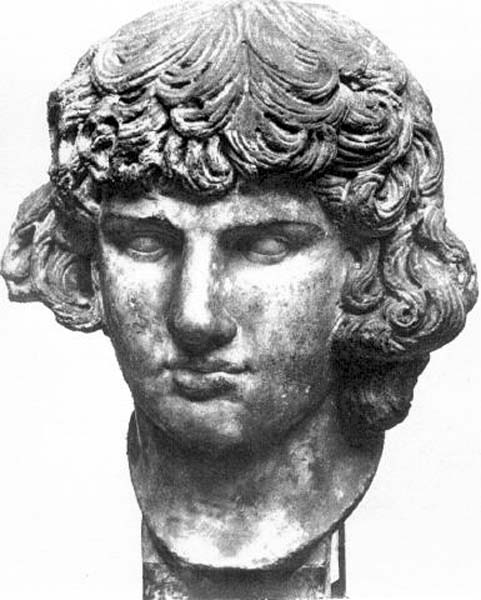
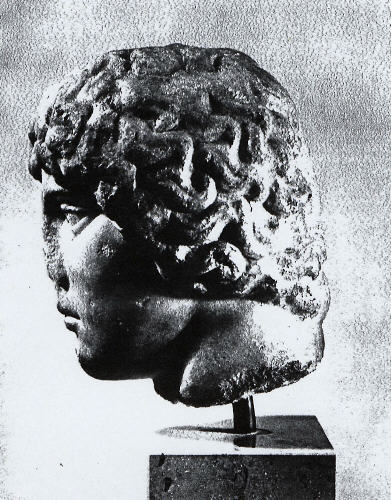
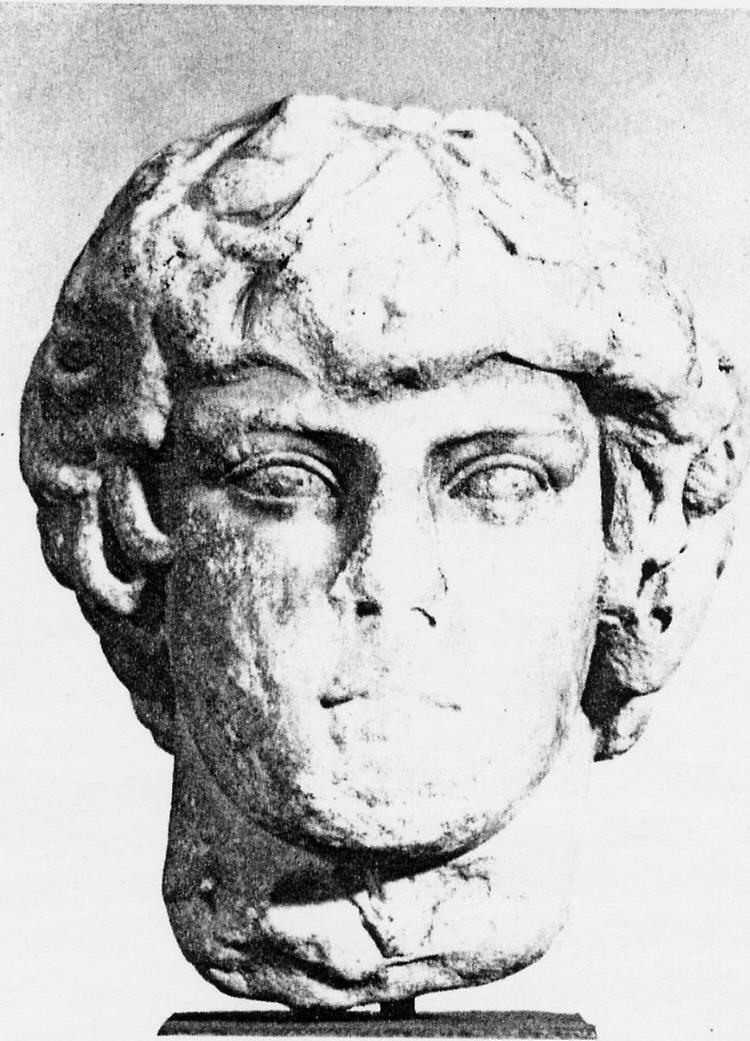
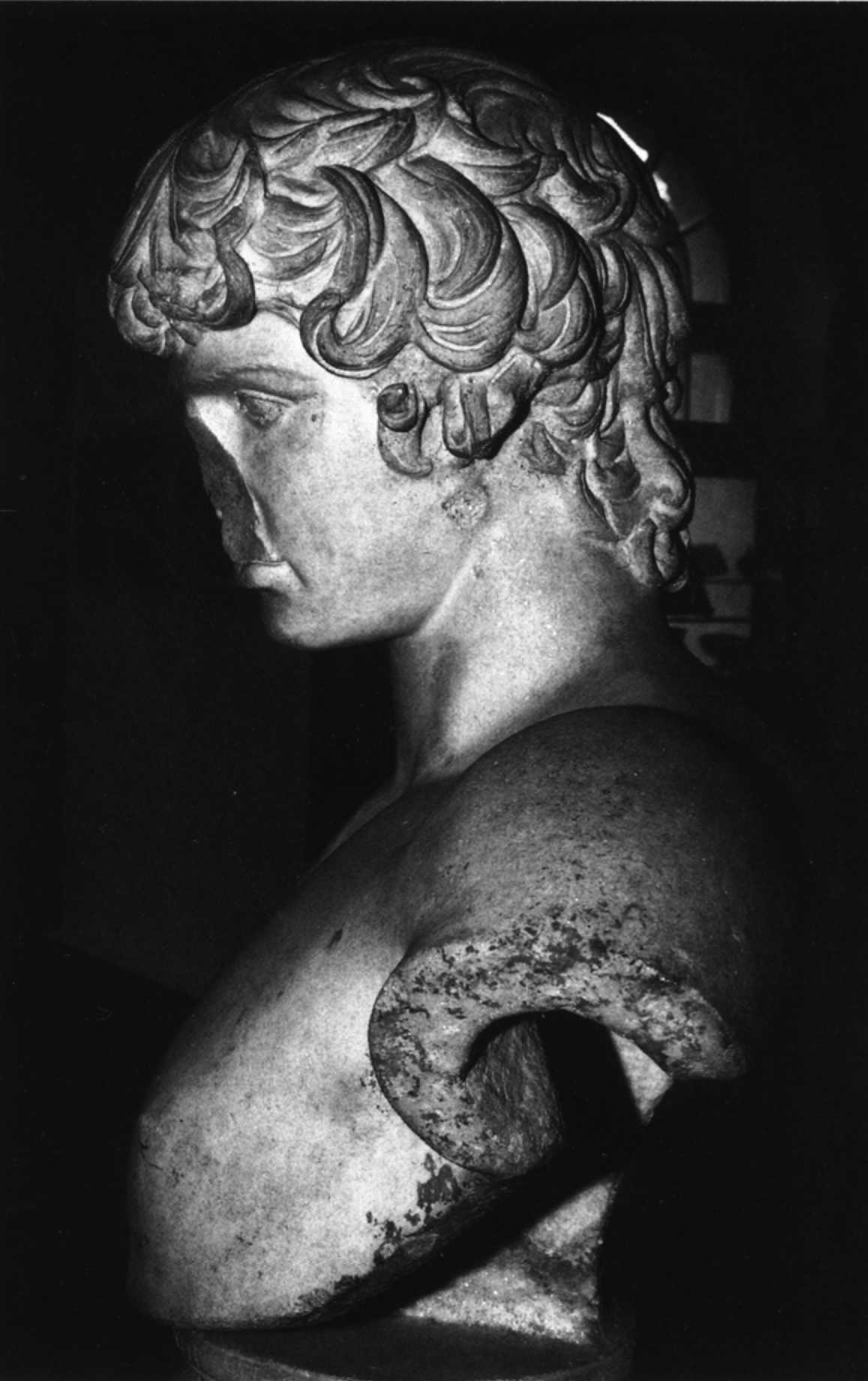
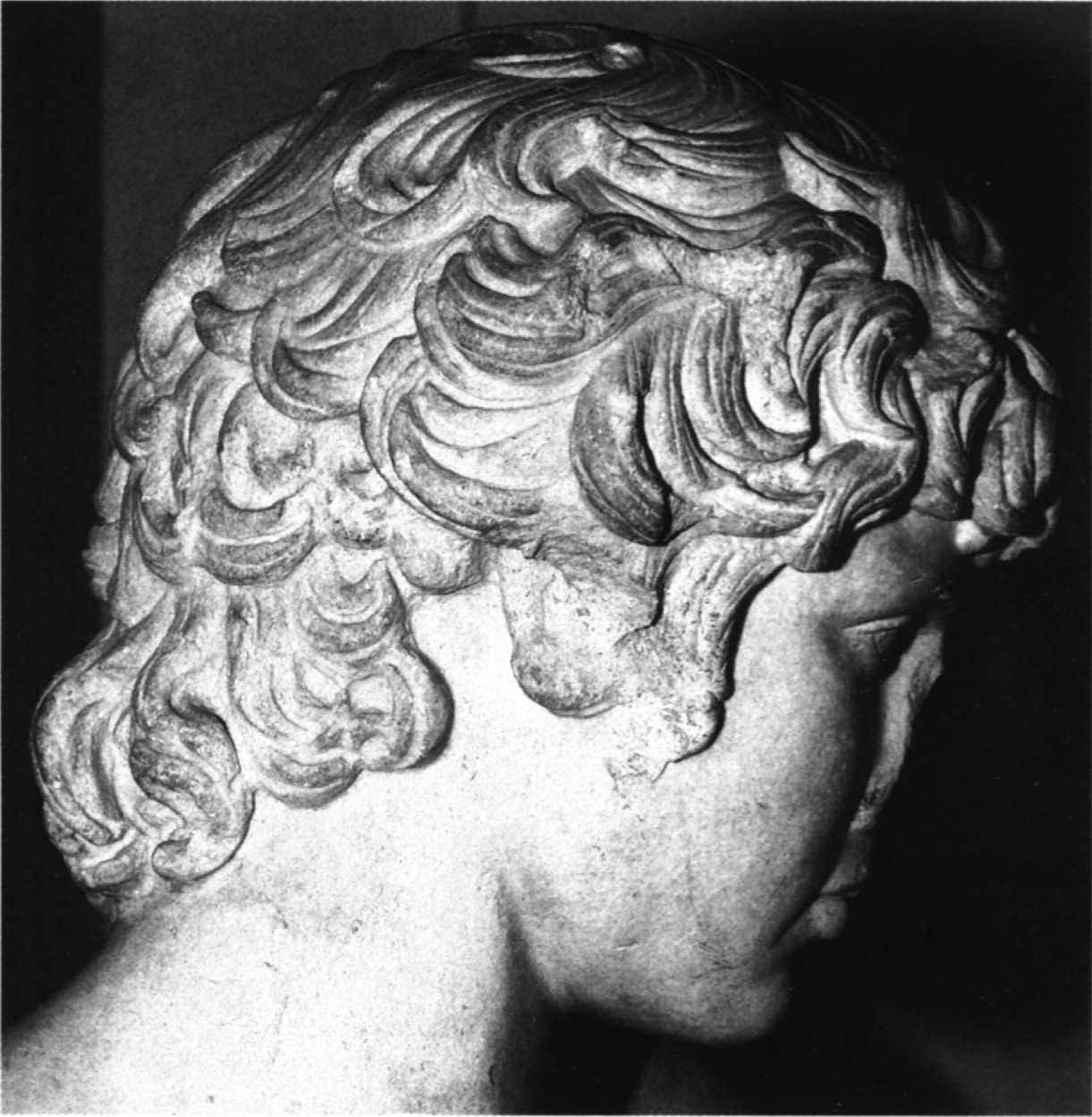
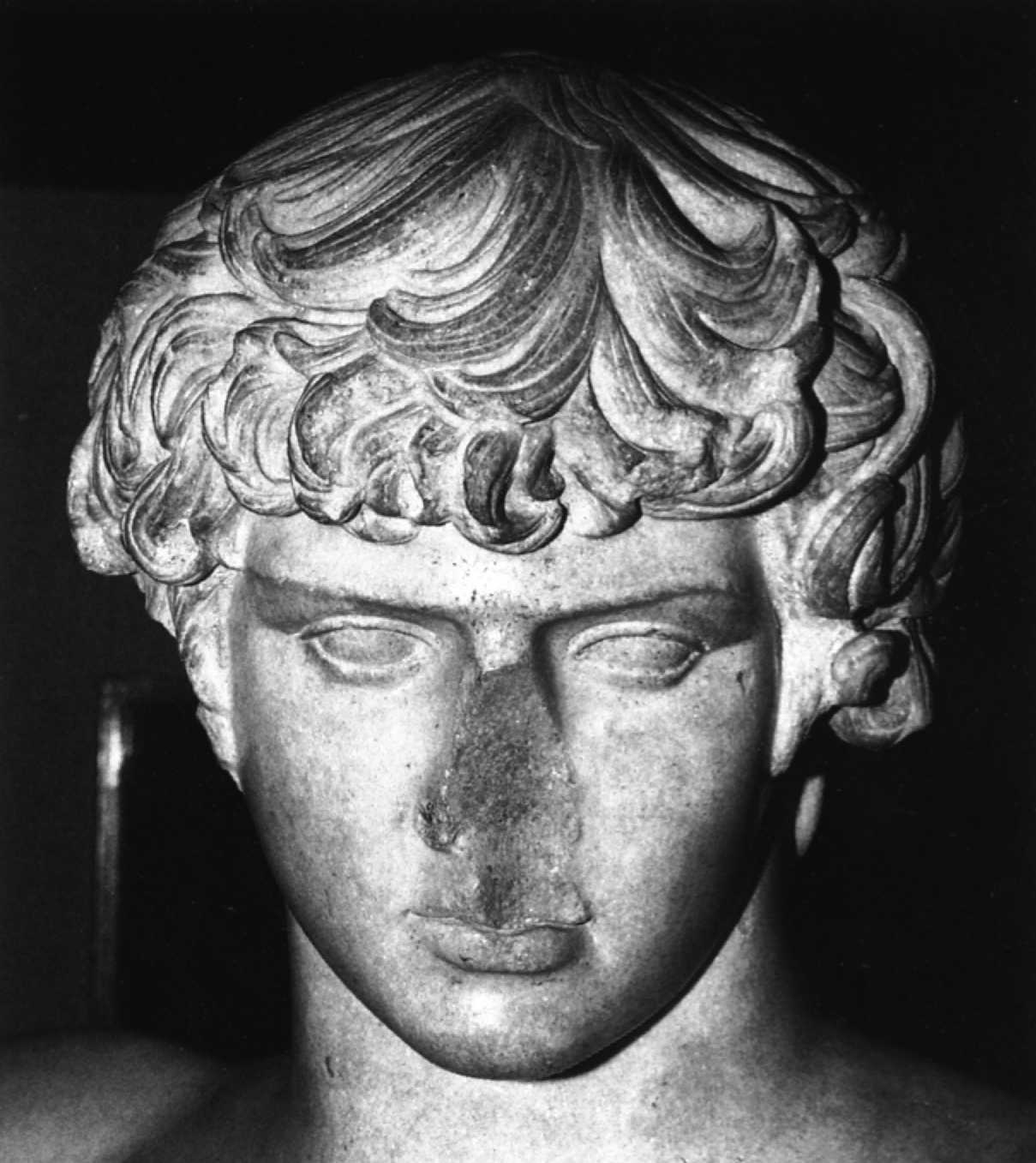
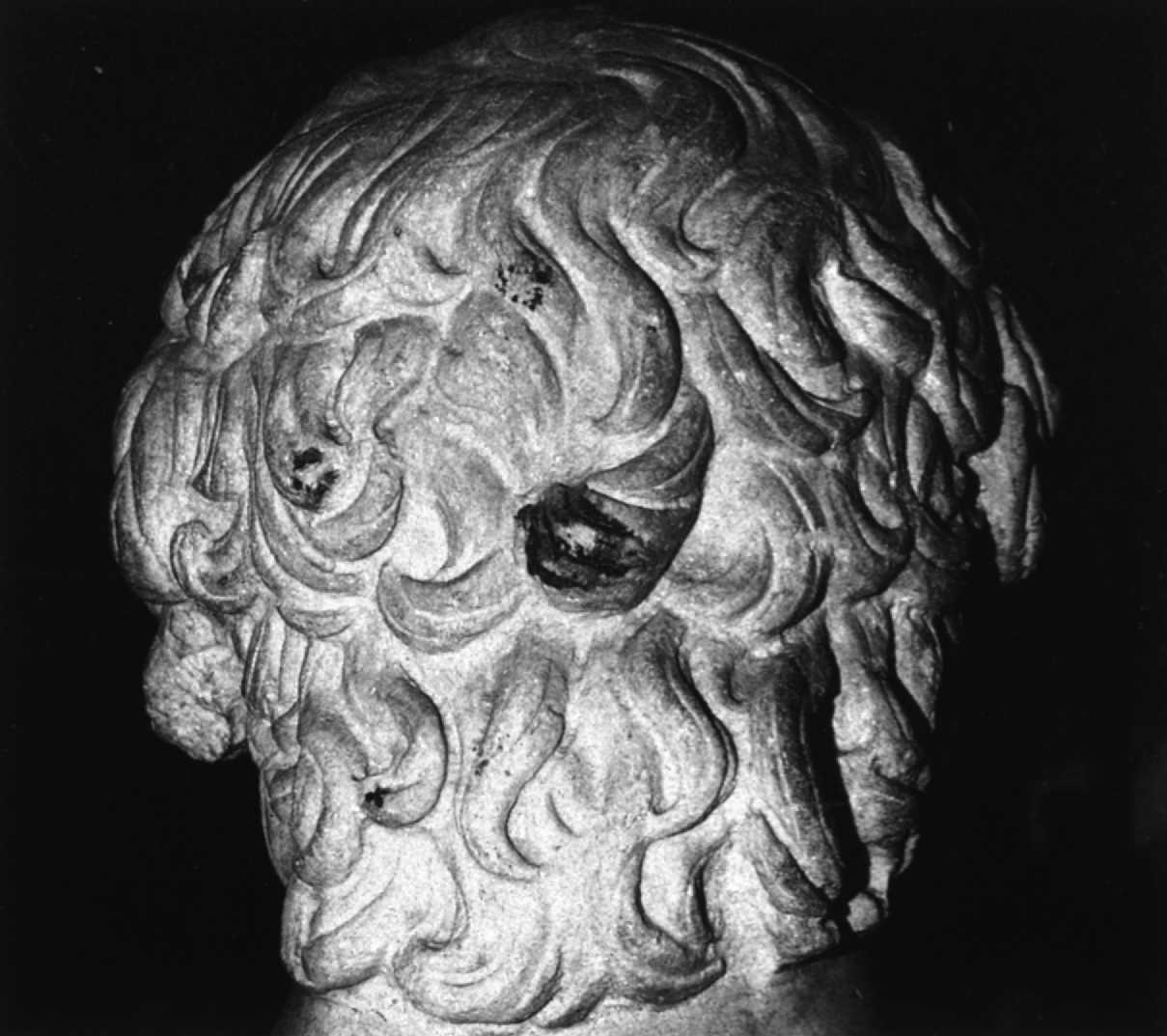
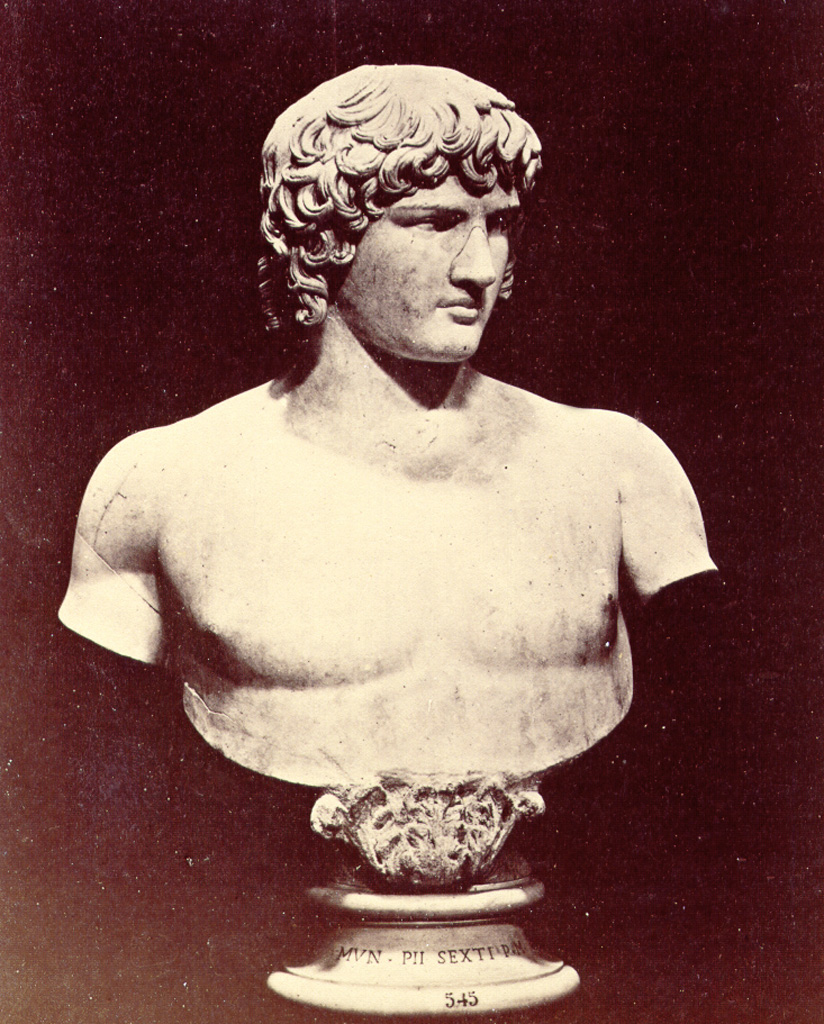
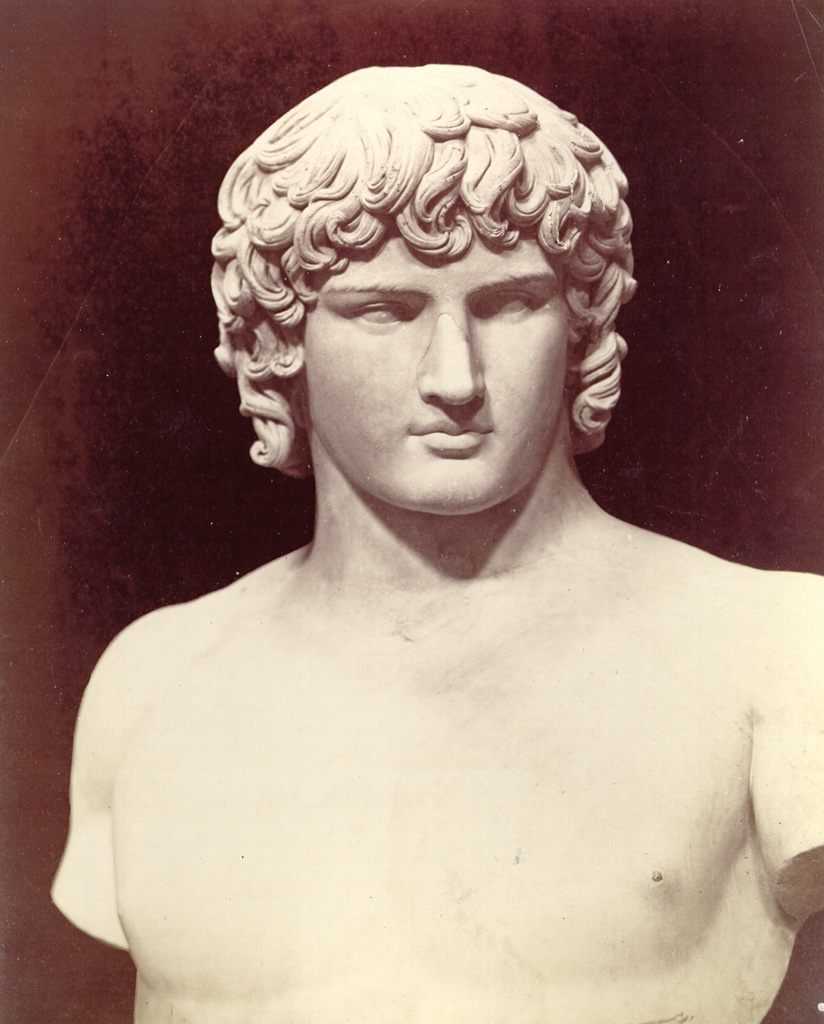
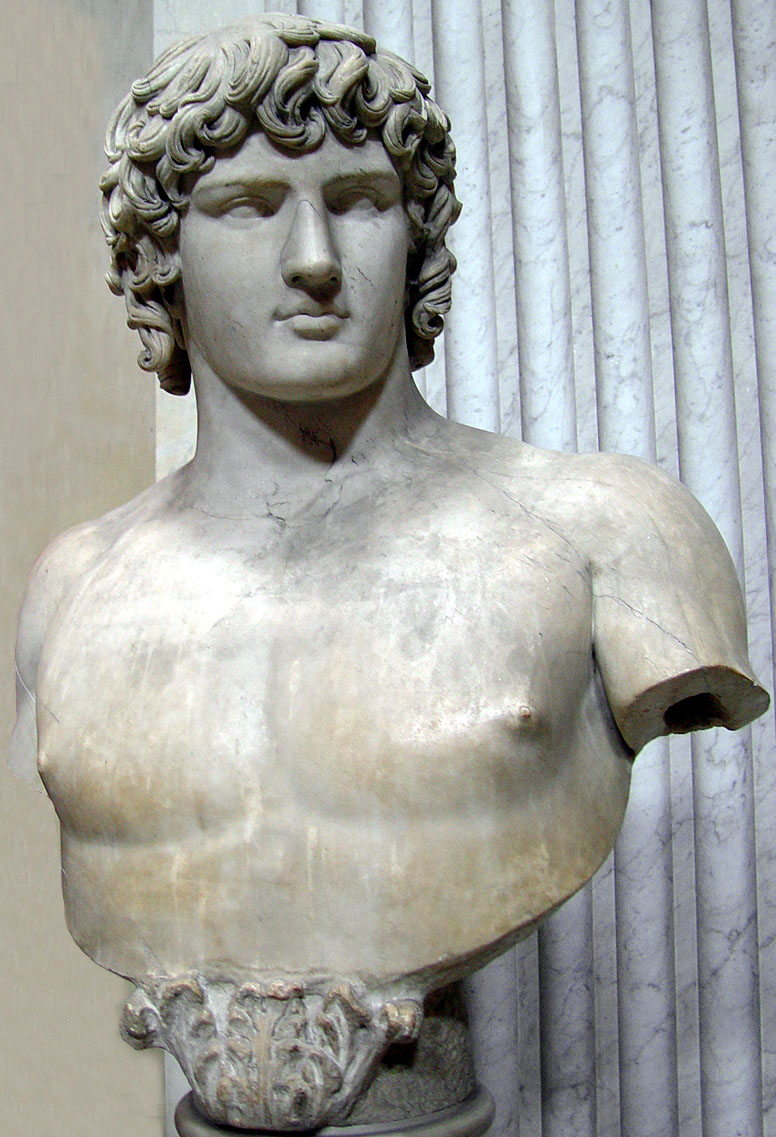
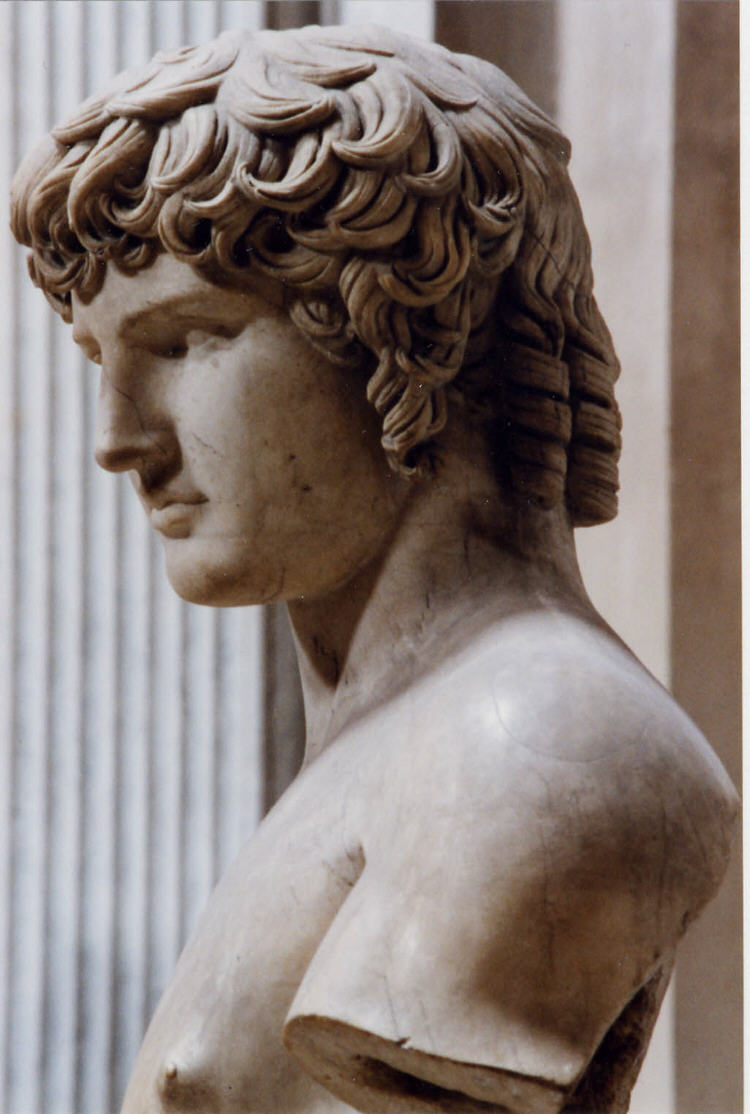
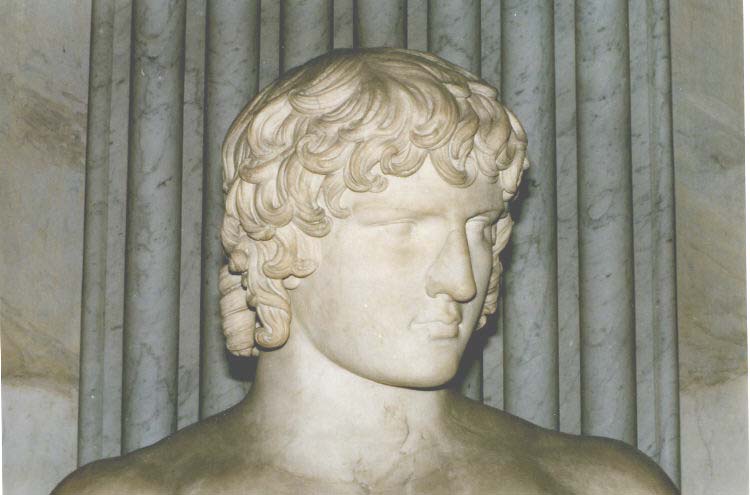
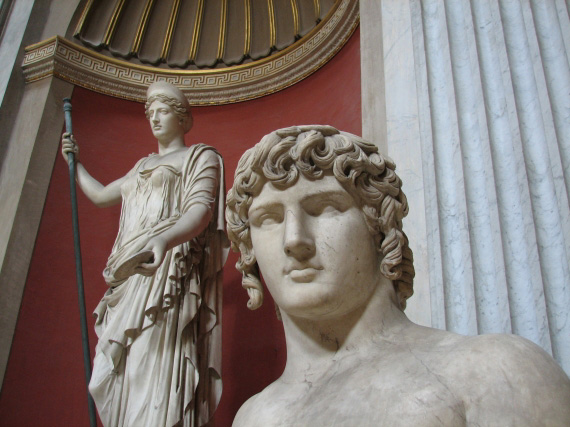
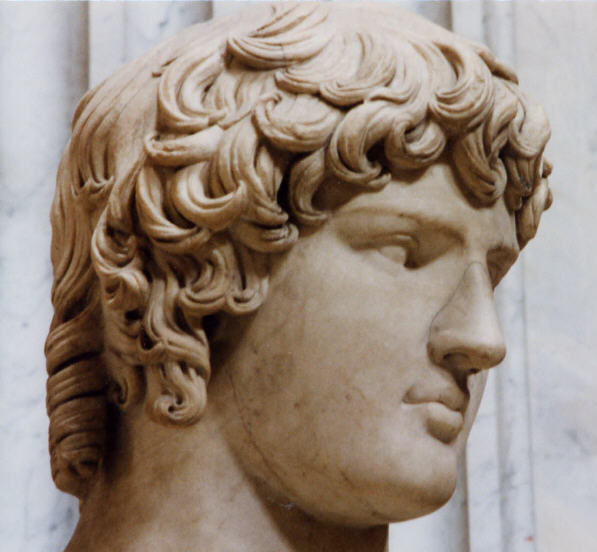
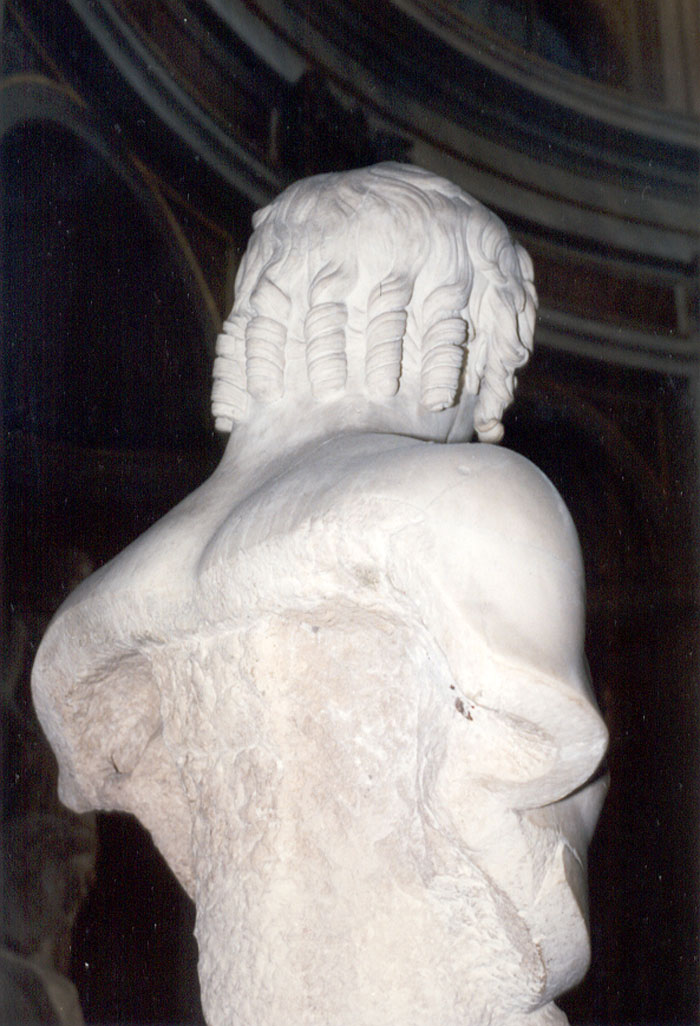
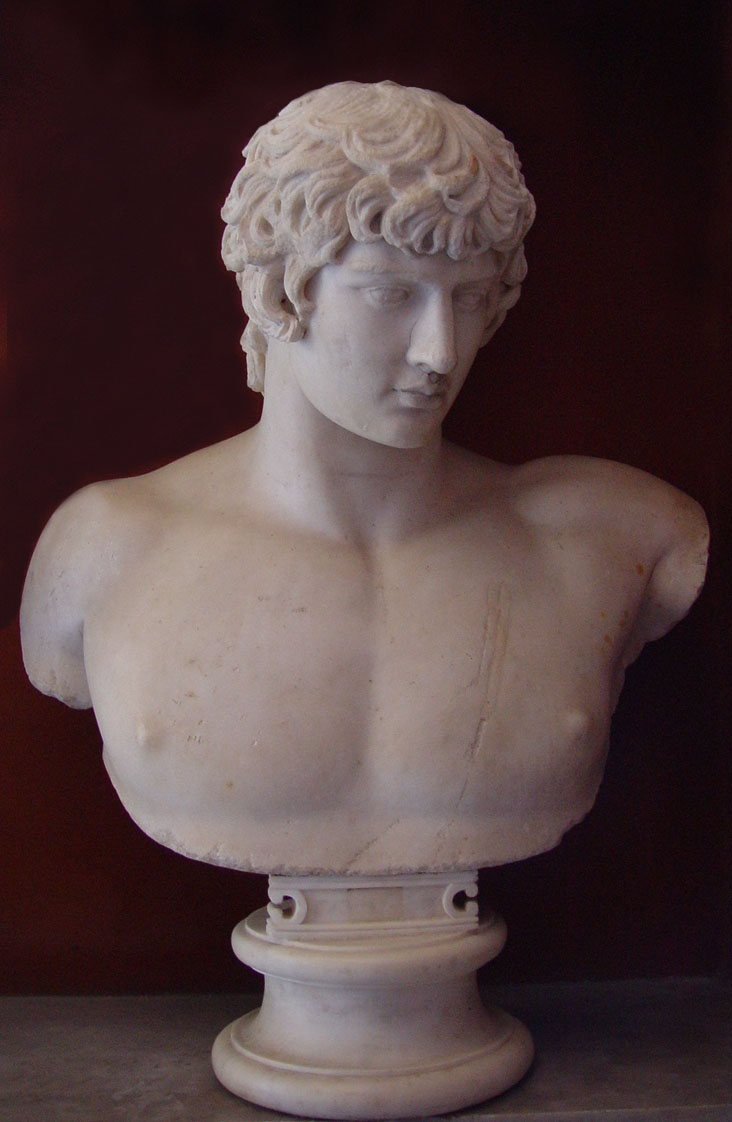
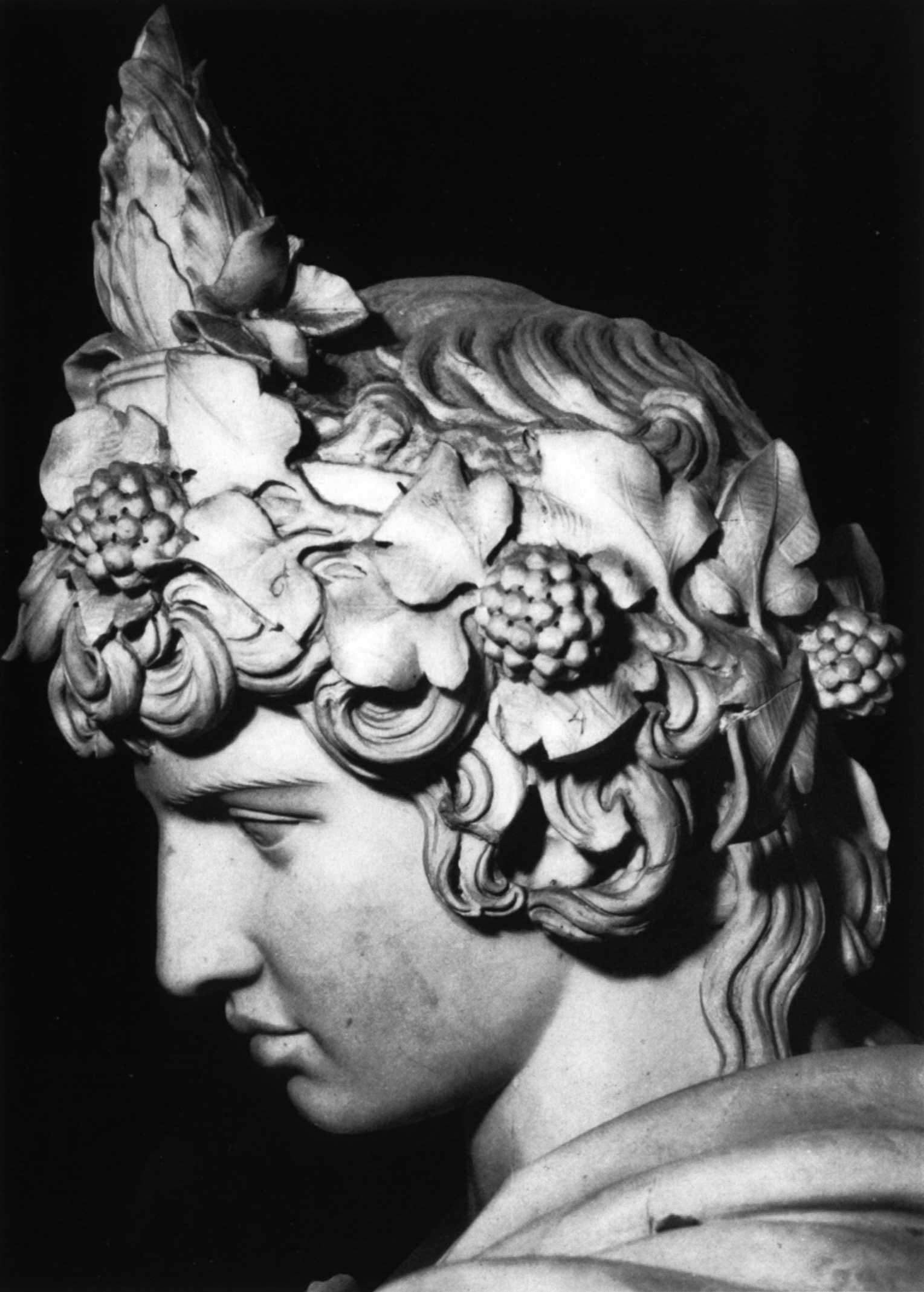
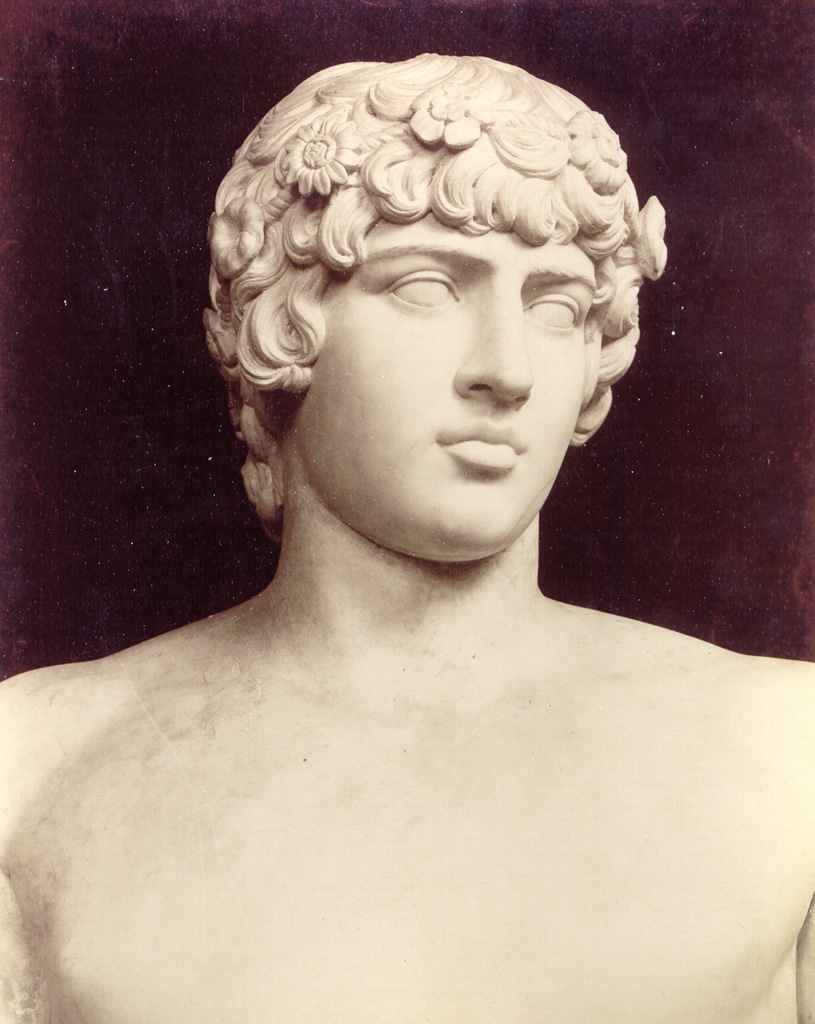
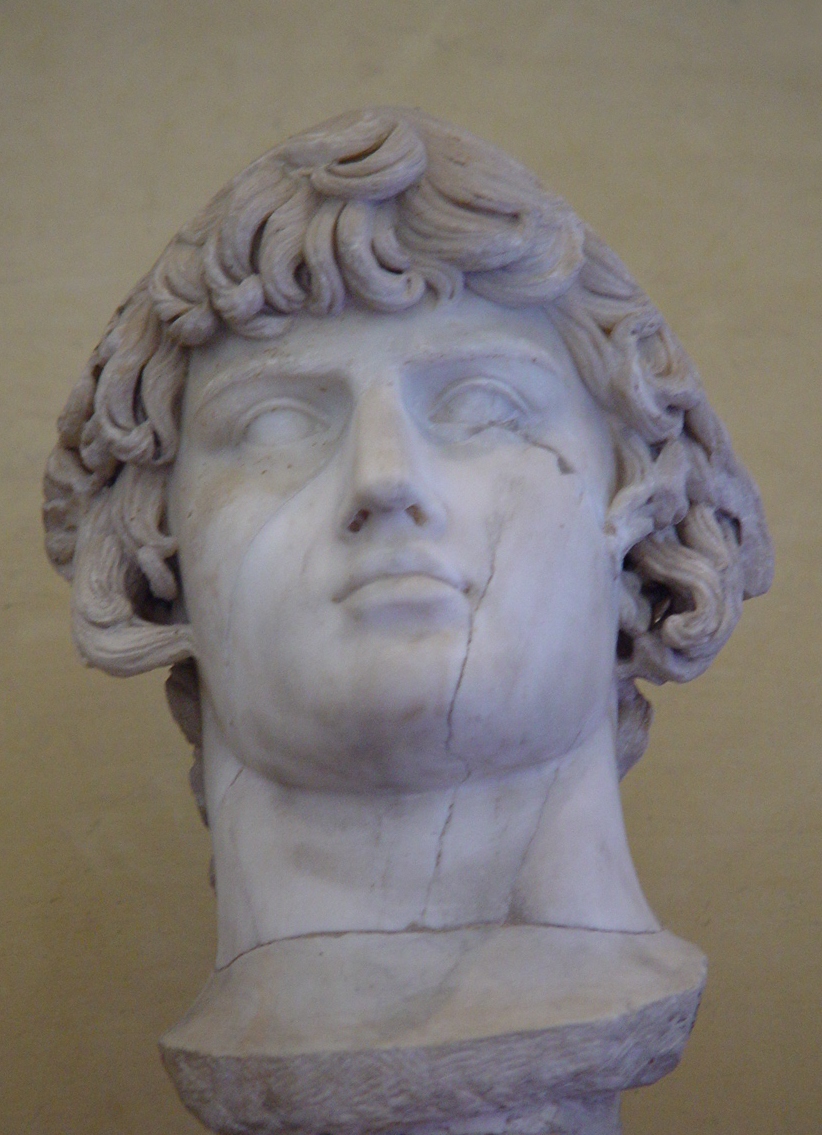
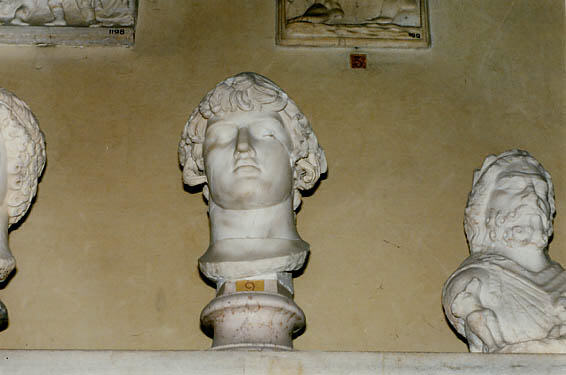
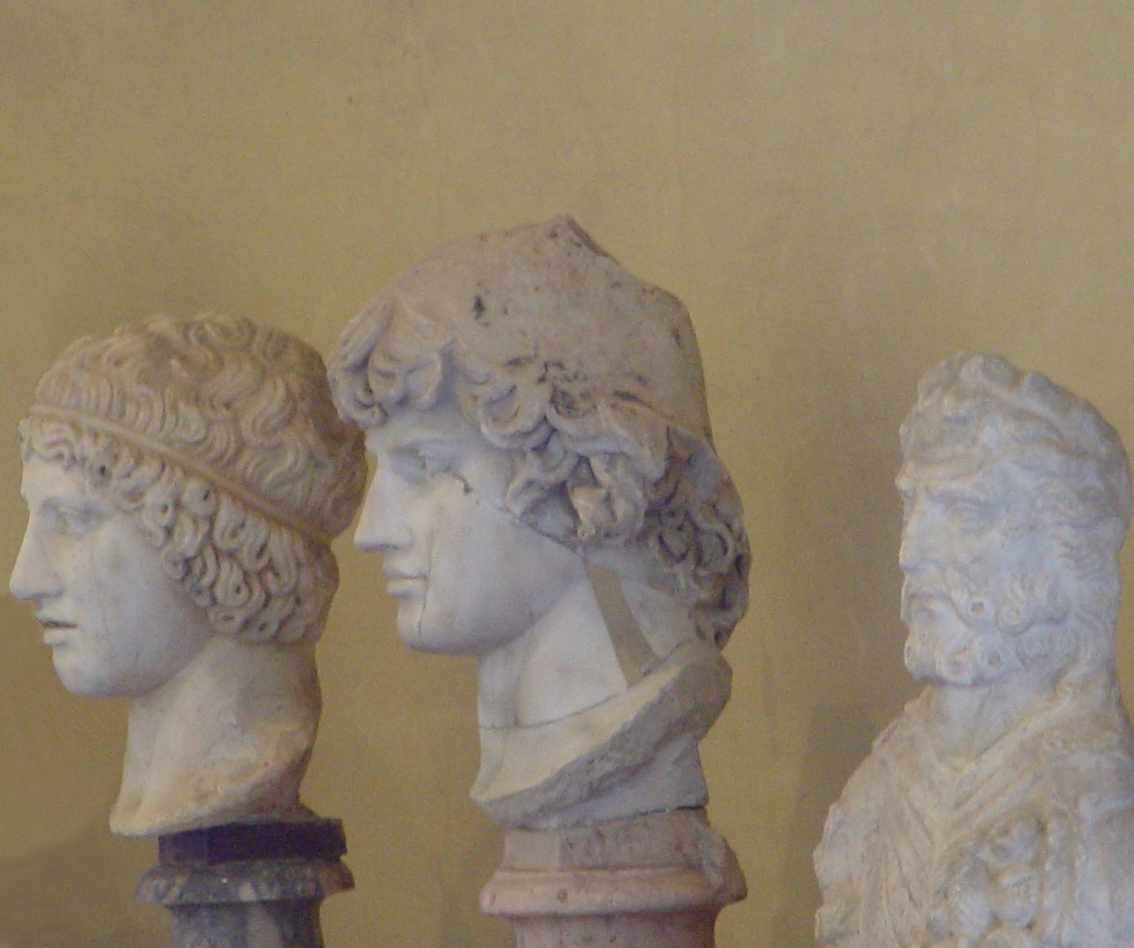
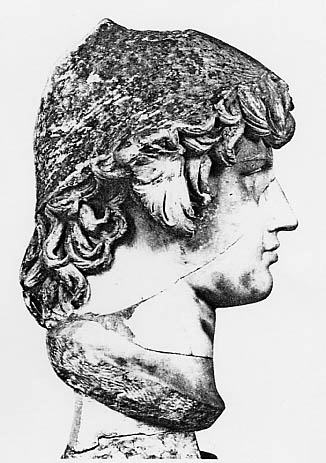
Vatican, Inv. N° 251, exhibited in the Sala Rotonda. Found in 1790 in Villa Hadriiana, acquired by the Vatican under Pius VI [1717-1775-1799], restored - nose, hair - by an unidentified sculptor and exhibited in the newly opened Sala Rotonda where it became rapidly famous. After the invasion of Italy by the French troops, the bust was seized by order of the general Bonaparte [1769-1821] under the terms of the Peace of Bologna (1796) and exposed in Paris from November 1801 until the end of the Napoleonic regime. Since its restitution to the Vatican, it regained its previous place in 1816 and has no longer left it since then. The peculiar features of this bust have led Marconi to propose it as the true portrait of Antinous (1923), opinion soon r! ejected on the ground that the treatment of the hair better corresponds to a divinity than to a human being.
«Offenbar sollte hier für die kaiserliche Villa etwas Selbständigeres, vom Schema Abweichendes geschaffen werden. Das erklärt auch die scheinbar individuellere Gestaltung»
(Georg Lippold, 1936)
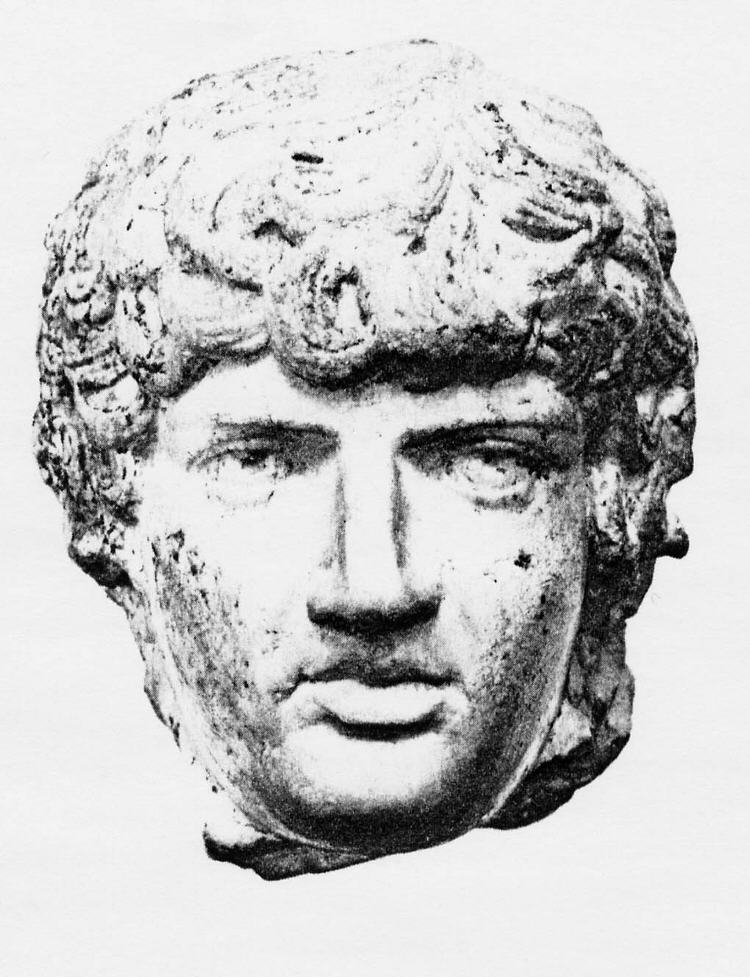
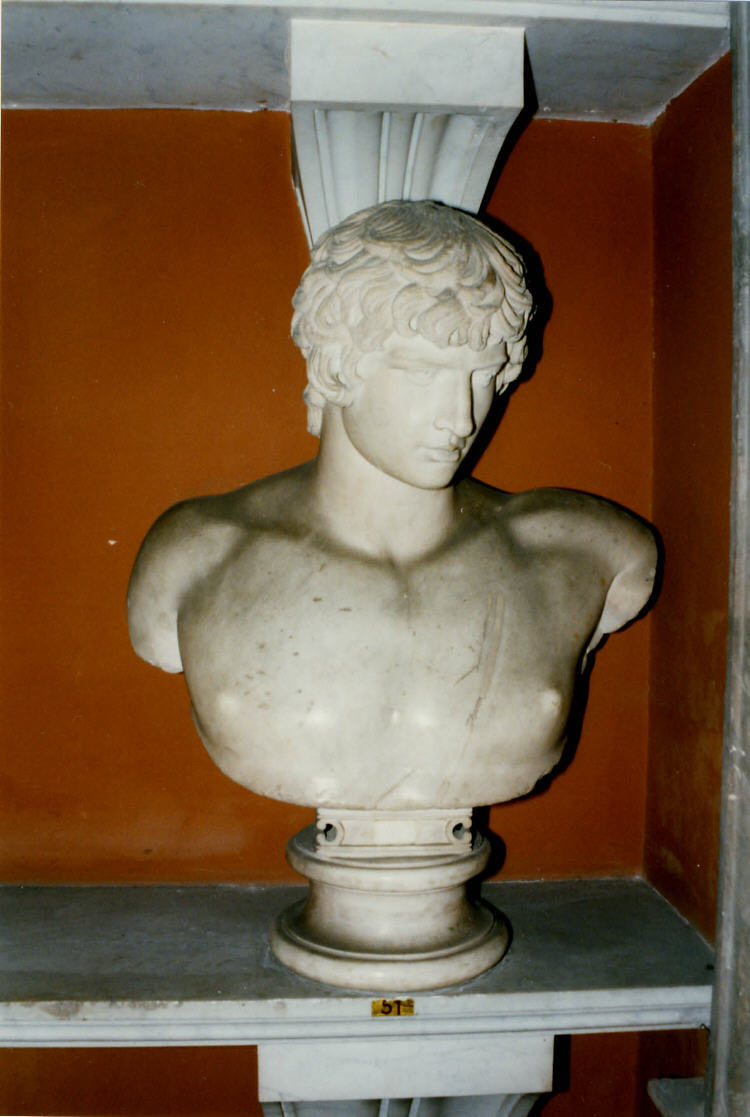
Vatican, Inv. N° 636, Sala dei Busti. Despite (unconvincing) attempts to trace it back to the 16th century, its provenance is still uncertain; it could simply have been found in the Villa Hadriana in the middle of the 18th century. Presented by Cardinal F. M. Lante (1695-1773) to Clemens XIV when he created the “Sala dei Busti” towards 1770, and permanently exhibited there since then.
«Le travail du buste est assez soigné ; les traits du visage, délicatement lissés, présentent un contraste voulu avec la chevelure, moins travaillée»
(Paolo Liverani, 1999)
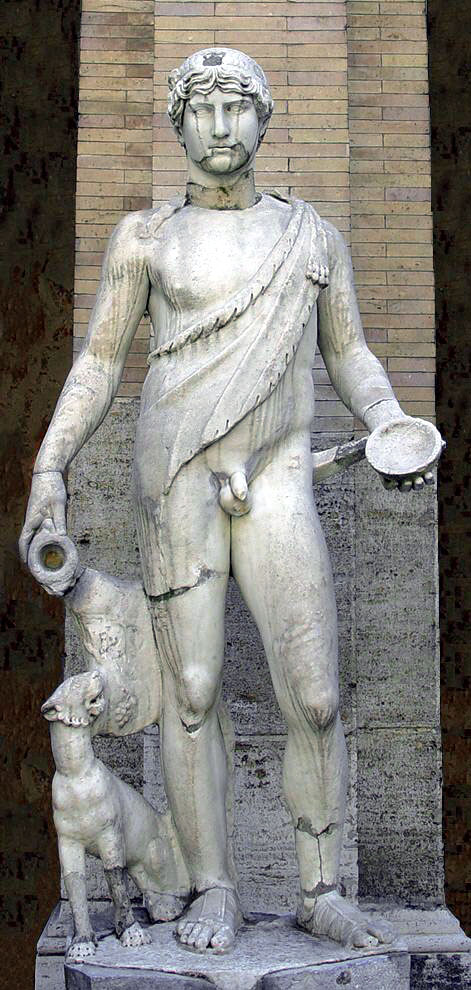
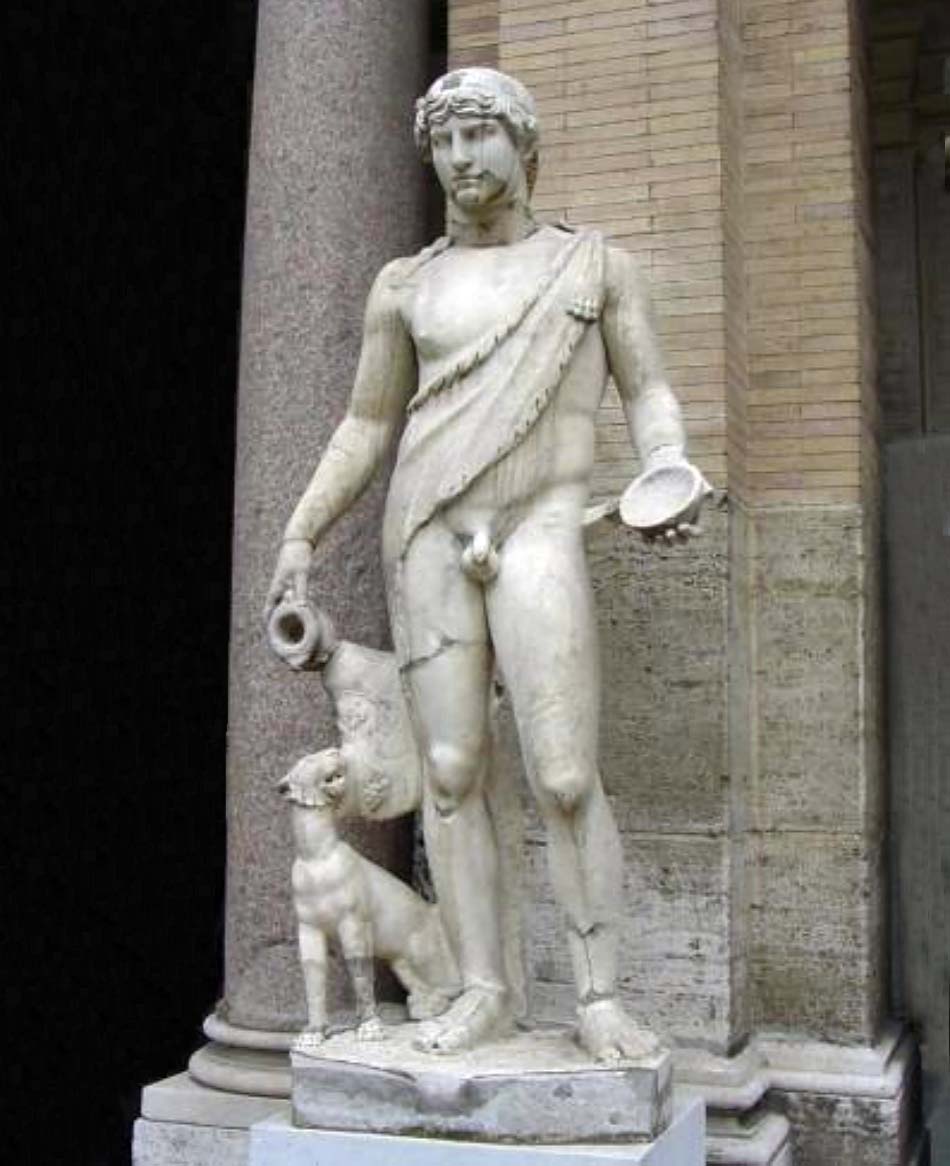
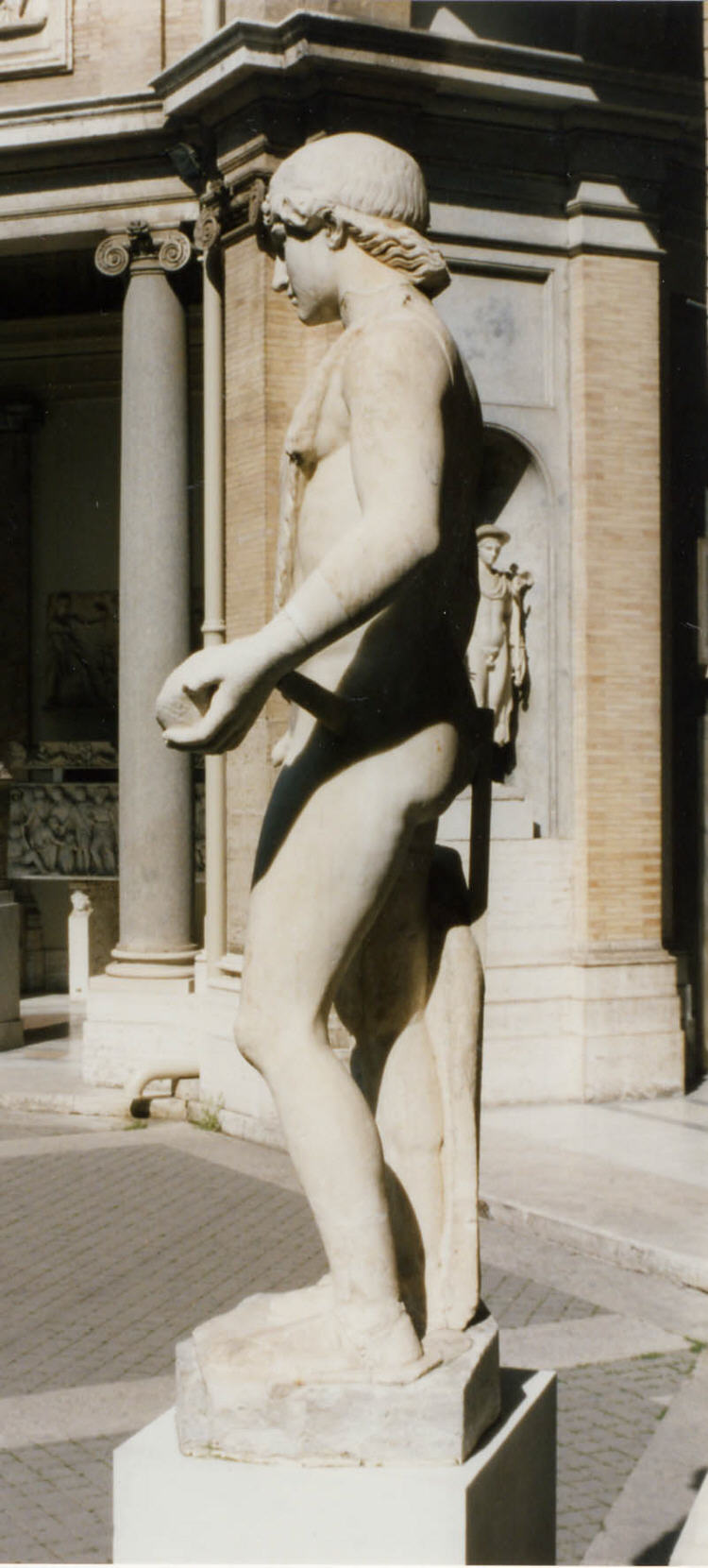
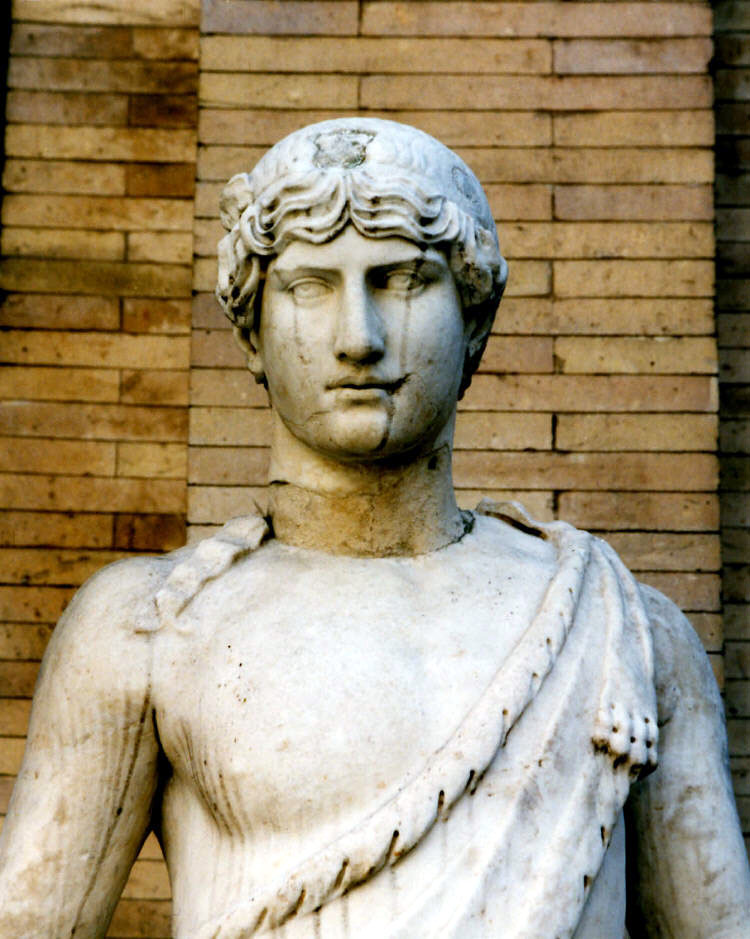
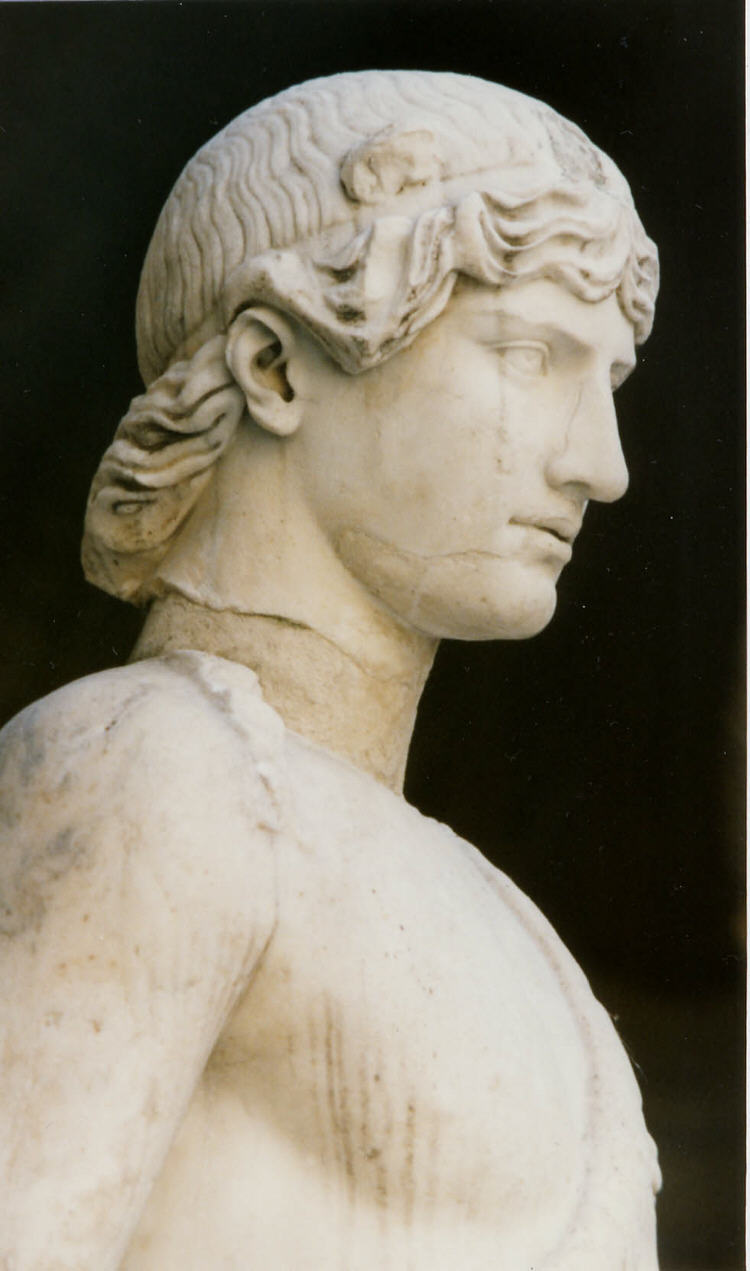
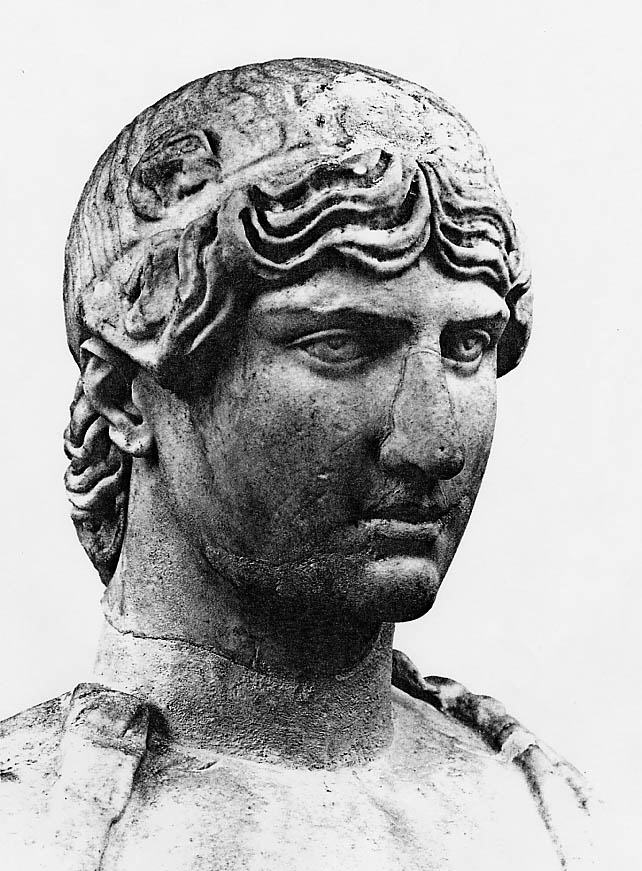
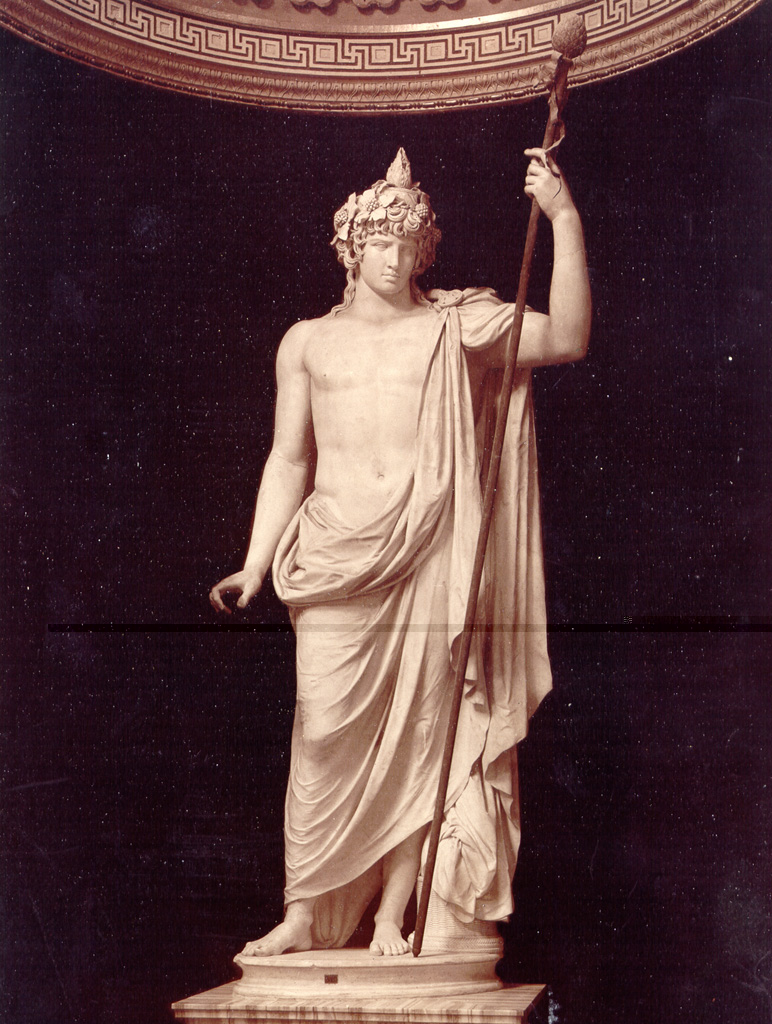
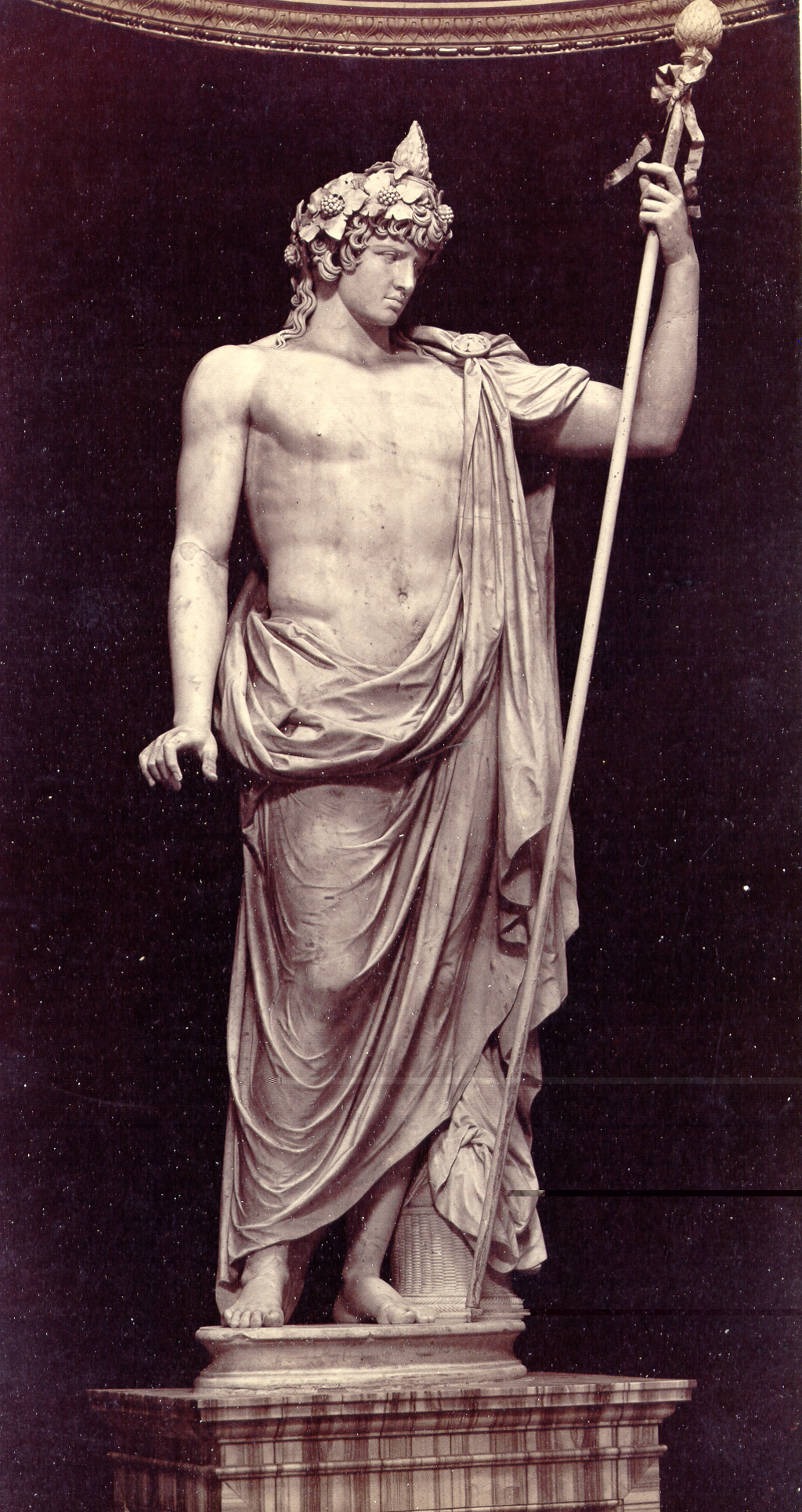
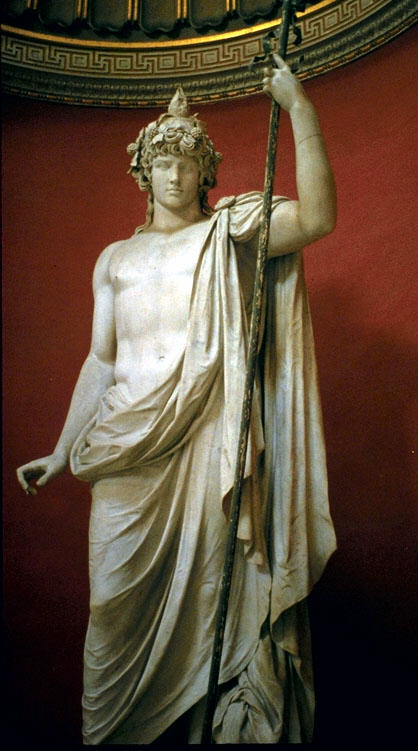
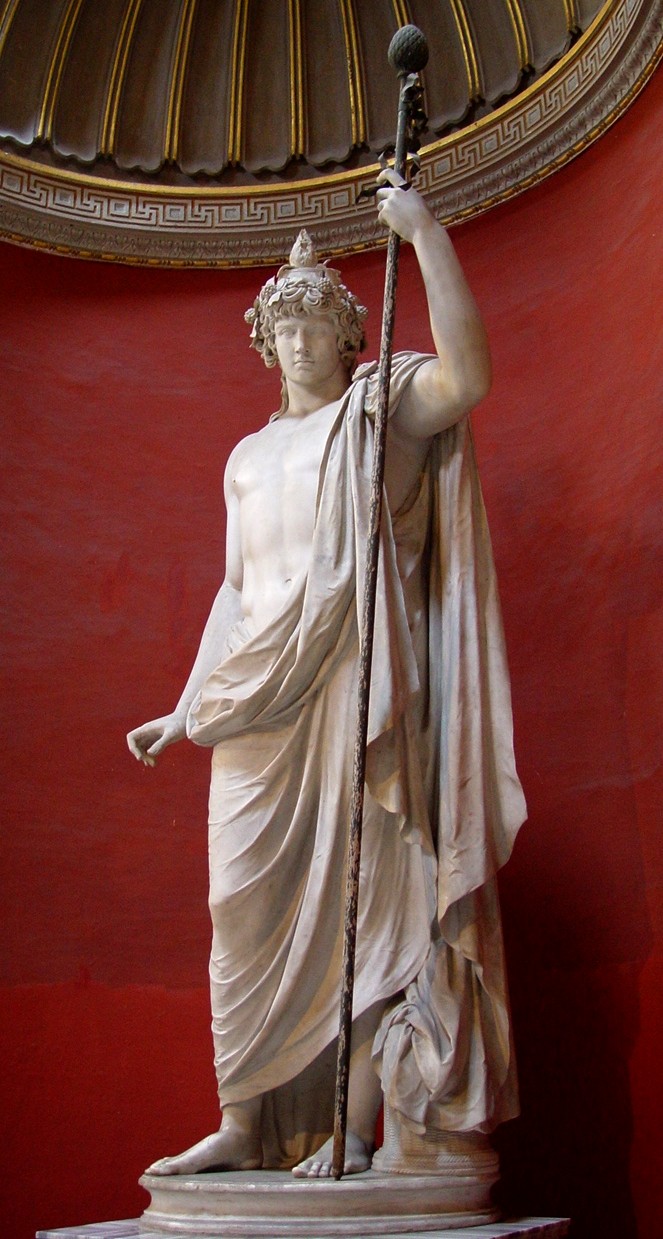
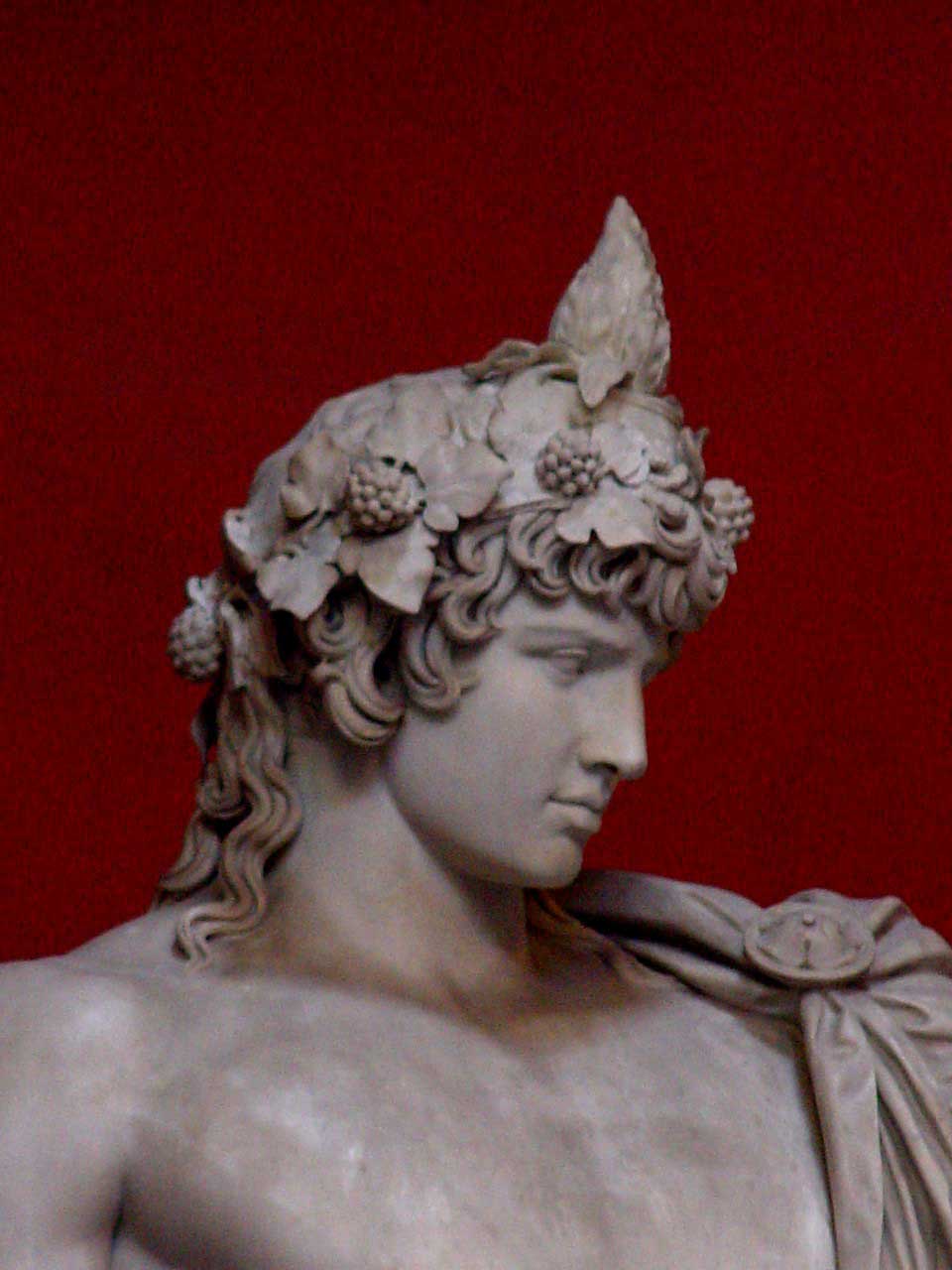
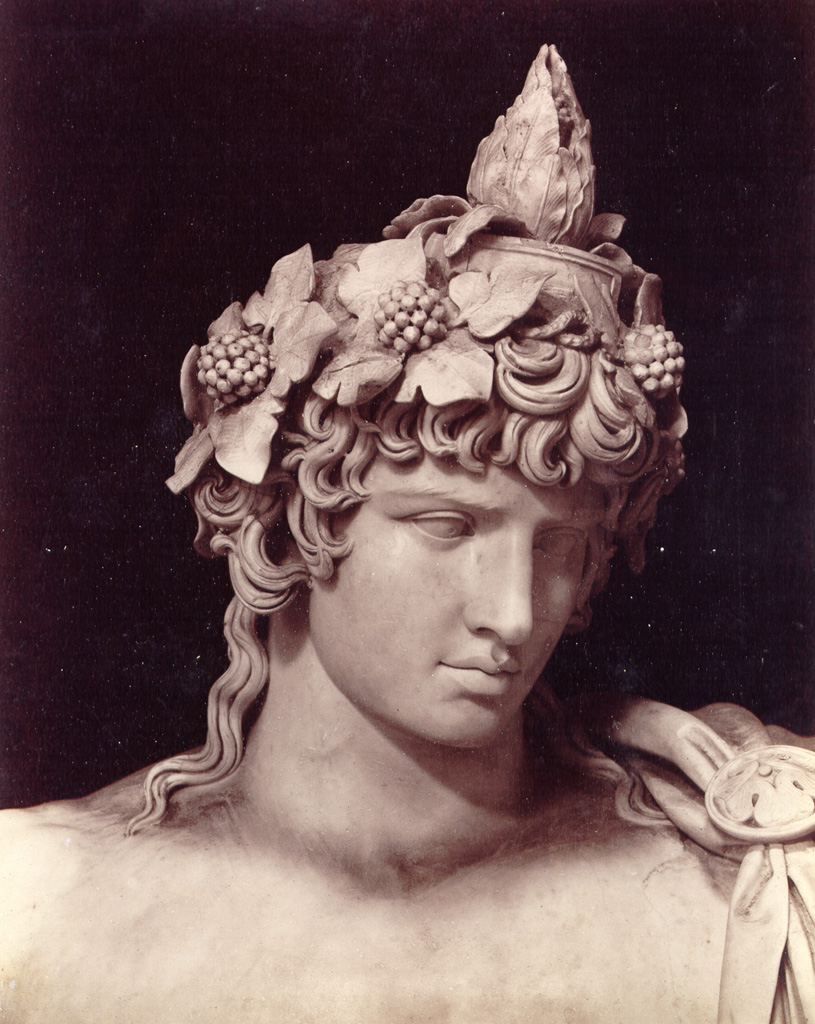
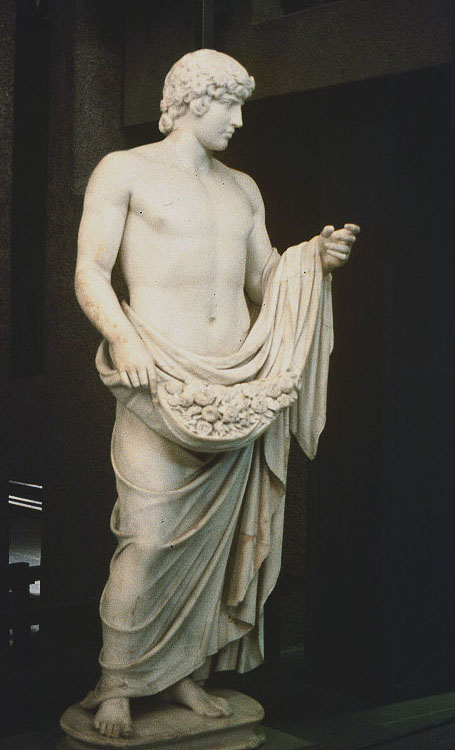
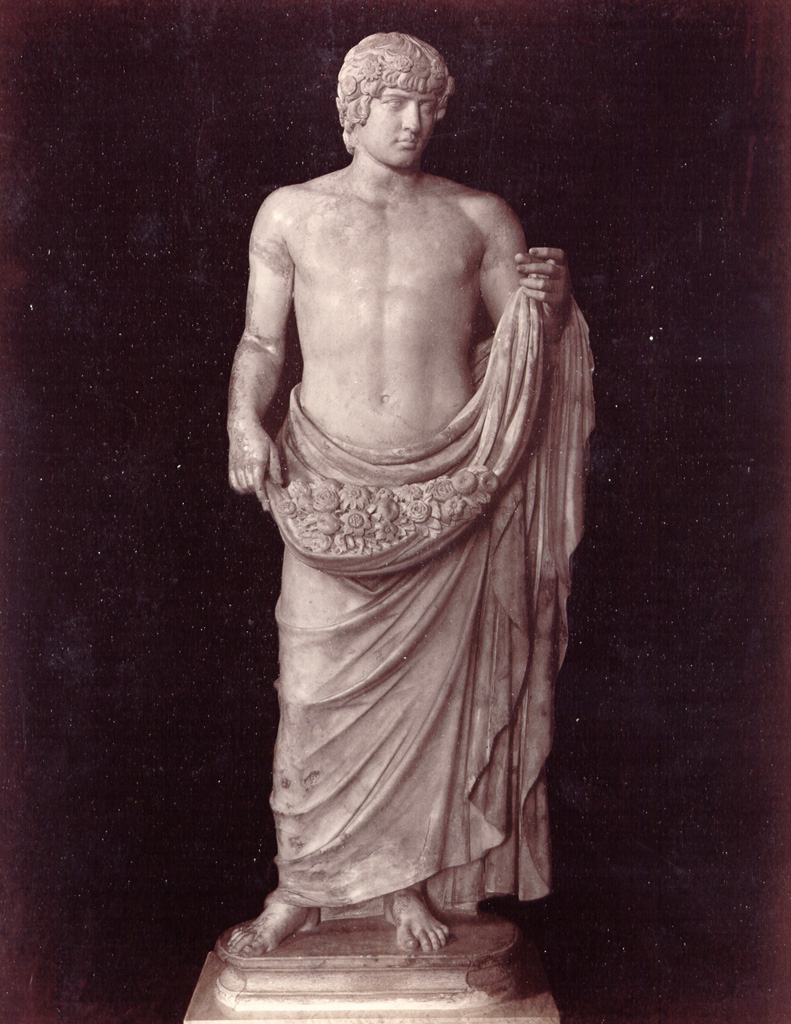
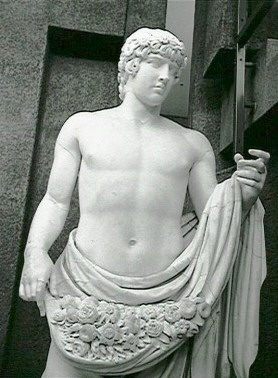
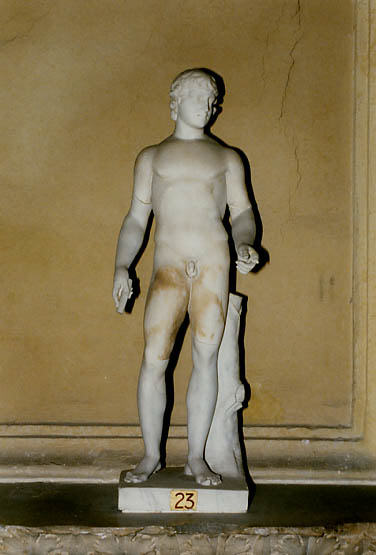
Vatican, Inv. N° 540, exhibited in the Sala Rotonda. Found in April 1793 in a villa belonging to Hadrian and situated in Preaneste (today : Palestrina). When found, the statue was nearly intact, simply broken at the legs, otherwise barely scratched, having obviously been concealed probably at the time of Constantine the Great (ca. 288-306-337), at the latest under Theodosius the Great (ca. 346-379-395). Restored by Giovanni Pierantoni (?-ca. 1814) between 1793 and 1795. Presented soon afterwards by Pope Pius VI to his nephew the Duke Luigi Braschi Onesti (1745-1816). Confiscated by the French when they occupied Rome from 1798, the statue never left the harbour of Rome, and was returned to his proprietor towards 1801. Pio Braschi Onesti, son of Luigi, sold it to Pope Gregorius XIV in 1843, who had it displayed in the Lateran Museum, open in 1844. Later, in 1863, Pope Pius IX had it moved to the Sala Rotonda of the Vatican, where it has been standing since then. Called the "Antinous Braschi" since the end of the 19th century, after its first owner.
«Die Breite und Tiefe der Brust, das starke Vortreten der Brustwarzen, die reine Glätte der fleischigen Gesichtszüge sind wohl Eigentümlichkeiten des Modells gewesen»
(Robert West, 1941)
Last picture © by
Bill Jennings
(Flickr.com)
Vatican, Inv. N° 9805, exhibited in the seldom accessible "Lateran Collection." Statue of a Genie, supplemented by a head of Antinous. Found in 1798 in Ostia.
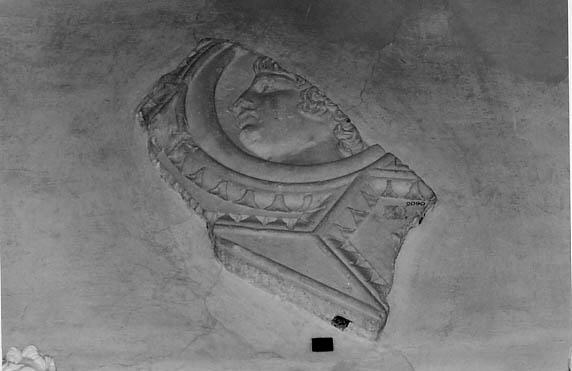
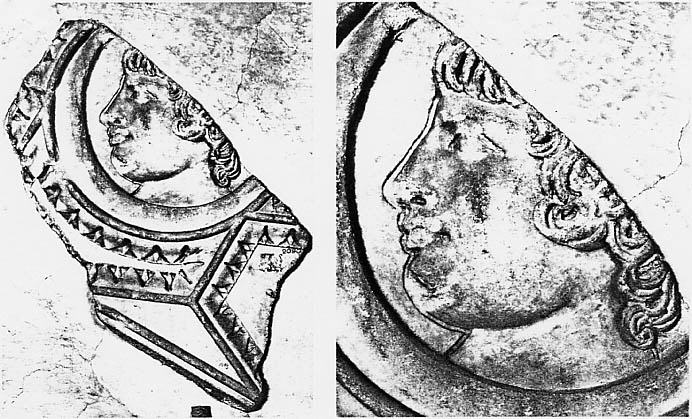
Vatican, Galleria Chiaramonti, Inv. N° 2090, Exhibited in the gallery, sealed in the wall of the bay LIV. Fragment of a relief acquired in 1803 from F. Lisandroni and A. d’Este. First recognised as Alexander the Great, then anonymous, it had to wait until the end of the 20th century to be tentatively identified with Antinous.
«Unleugbar besteht ein Zusammenhang mit dem Antinoosideal, weshalb sich die Frage stellt, ob nicht vielleicht der Bithynier selbst gemeint ist.»
(Hugo Meyer, 1991)
Vatican. Galleria Chiaramonti, Inv. N° 2065, exhibited in the gallery Chiaramonti since its acquisition, now in the bay LI. Head of Antinous adequately set on a not-pertaining youth’s statuette. Provenance unknown. Acquired as such from Alesio Franzoni in 1804. Often ignored in the literature.
Vatican – Galleria Chiaramonti, Inv N° 2065, now in the gallery Chiaramonti, bay II. Head of Antinous. The lower part of the face and the neck are modern restorations. Acquired in the years 1810 or 1820. Permanently exhibited since then, albeit at various places. Although the loos of his headgear precludes a firm identification of the divinity under which Antinous is represented, Ganymede or Attis are most often quoted :
«In questo caso, Antinoo appare nelle vesti di Attis o di Ganimede»
(Paolo Liverani, 1989)
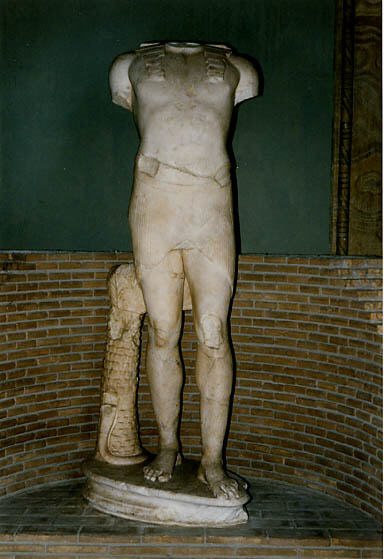
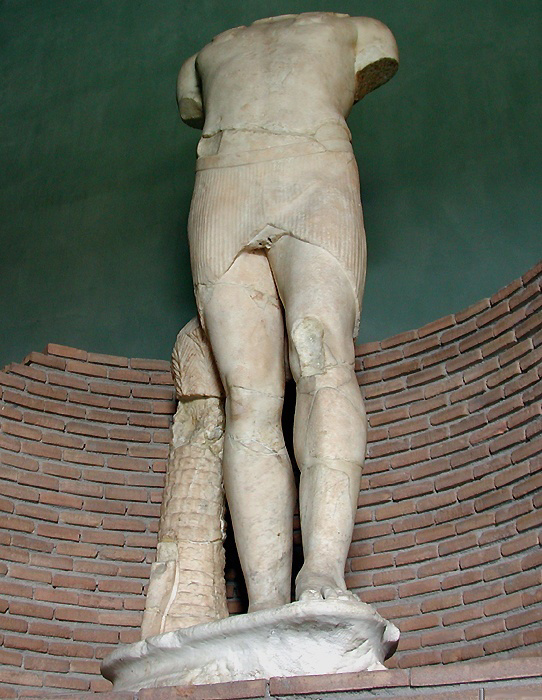
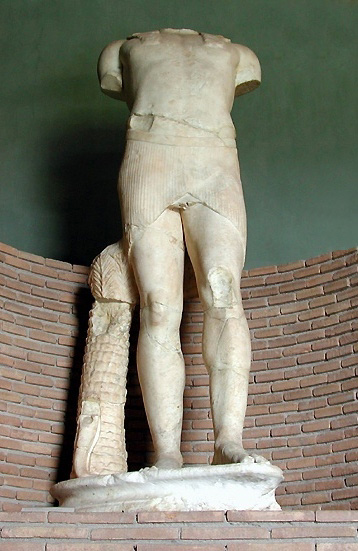
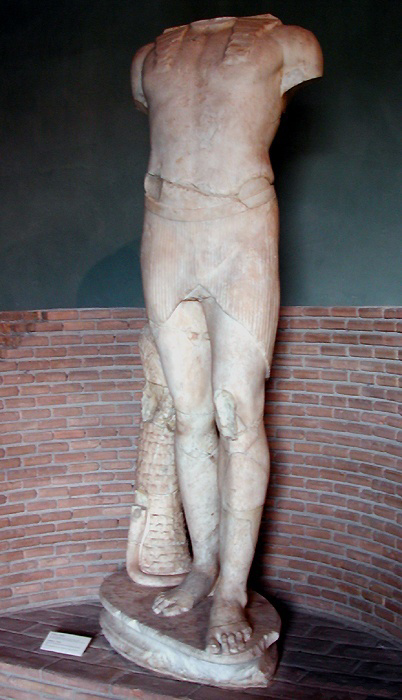
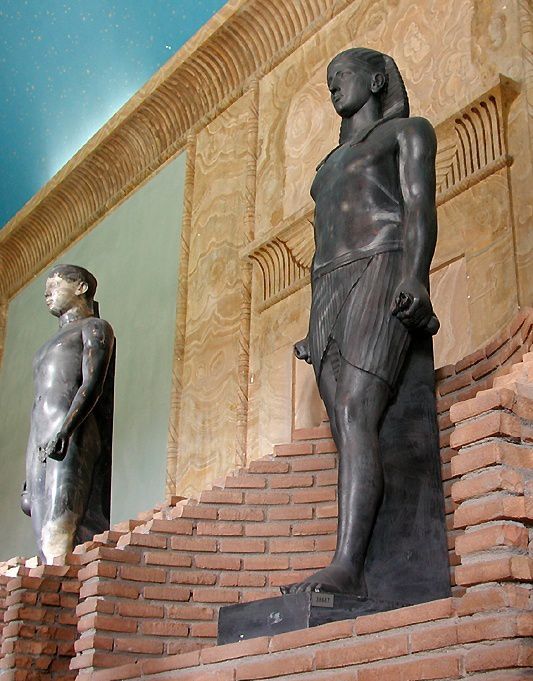
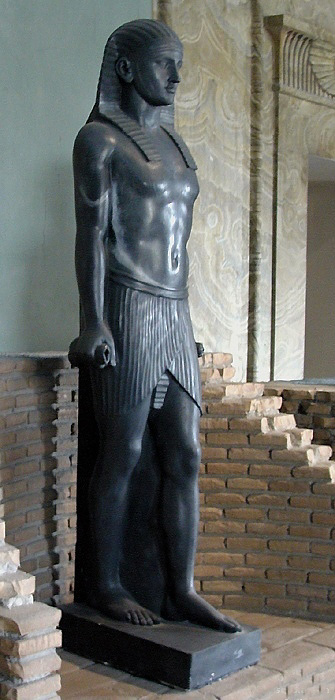
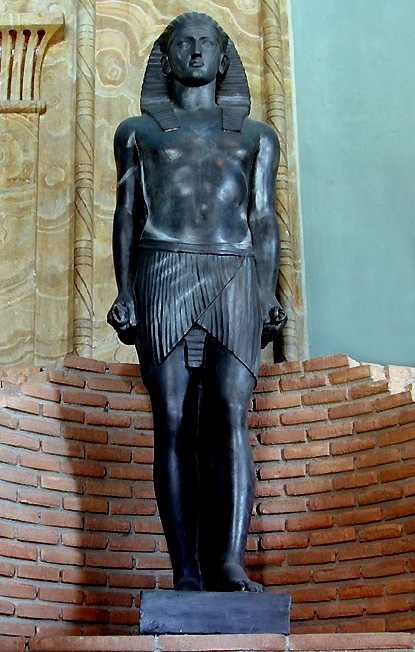
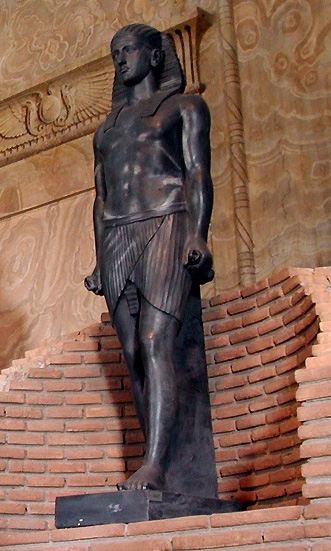
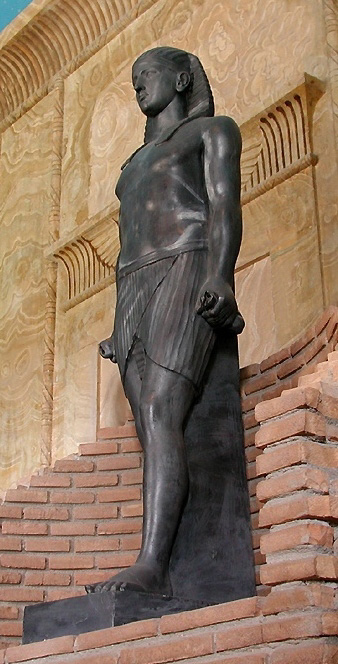
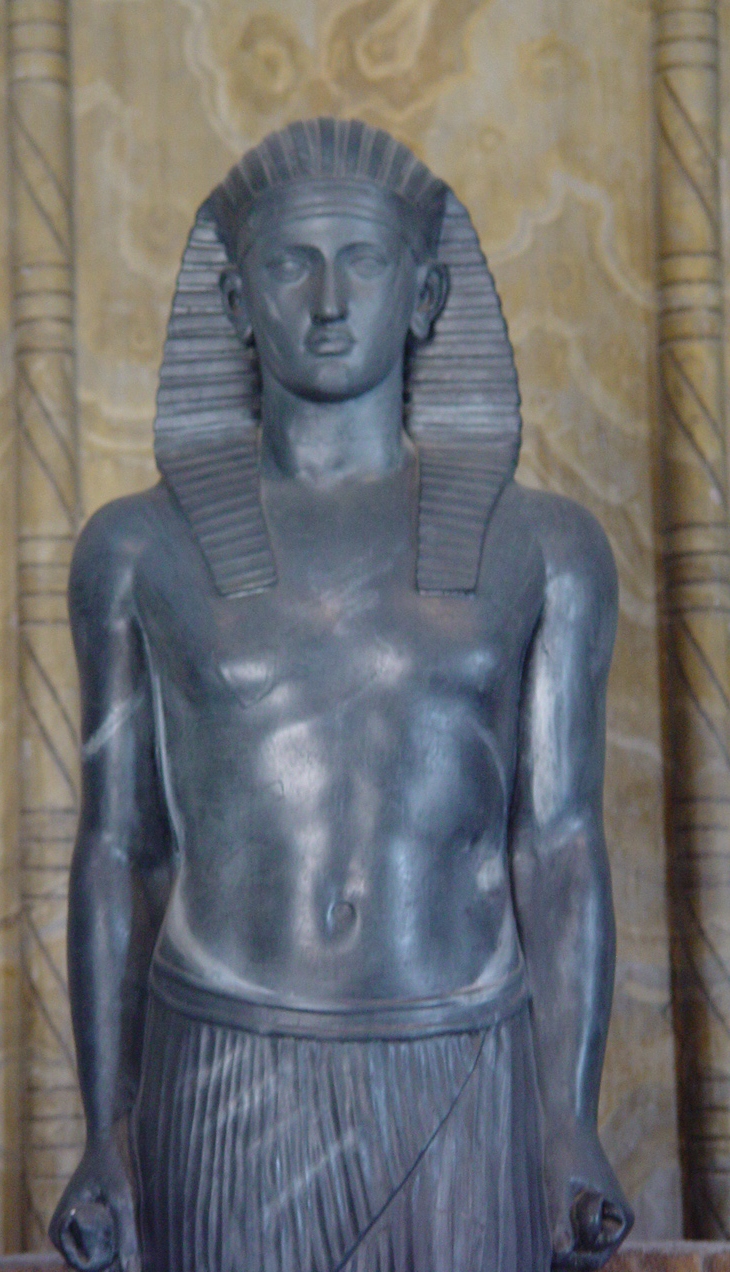
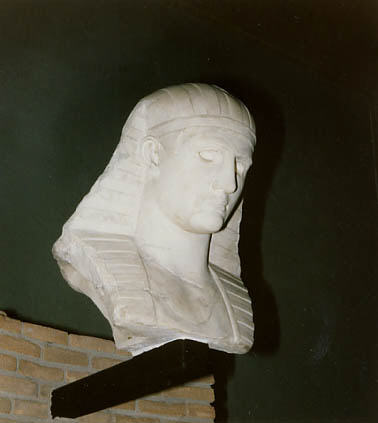
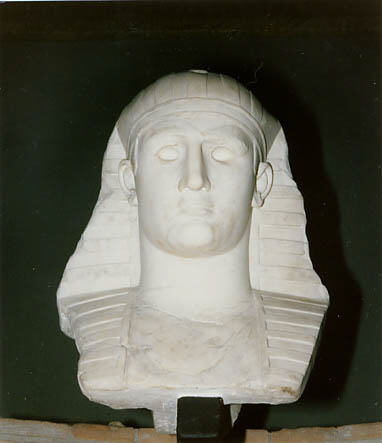
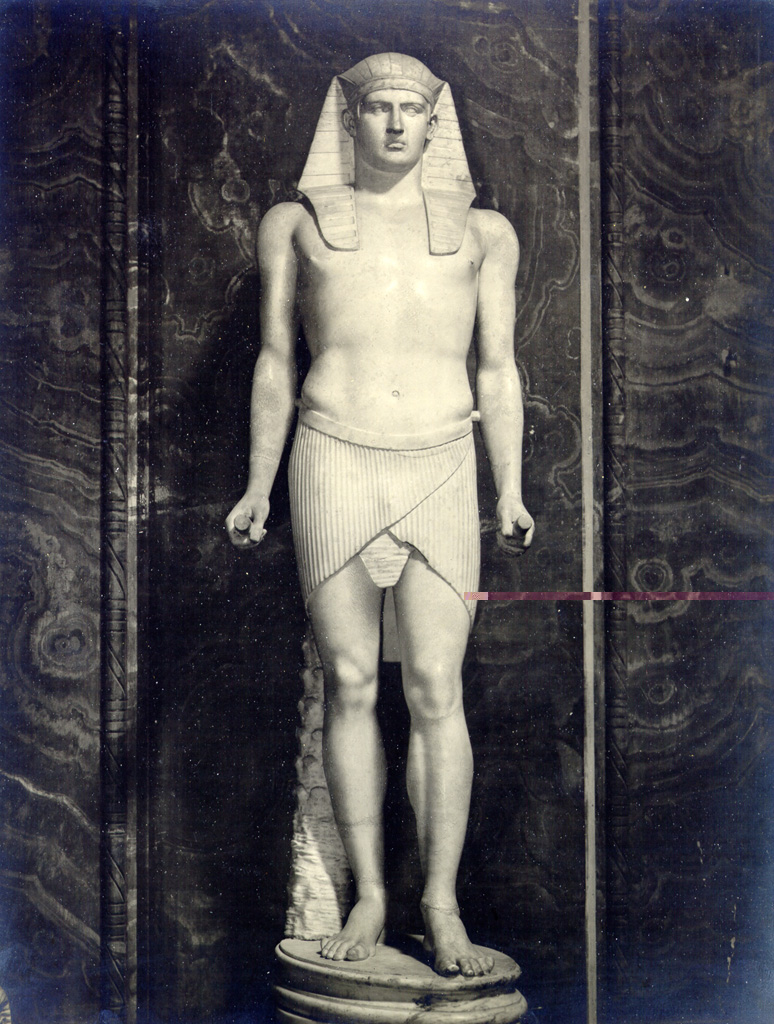
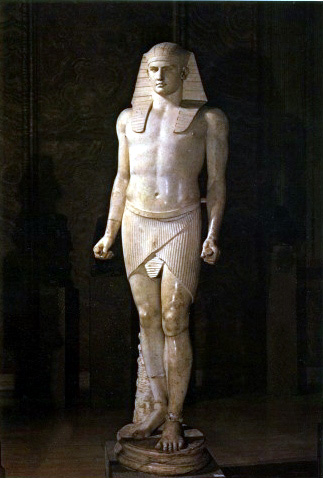
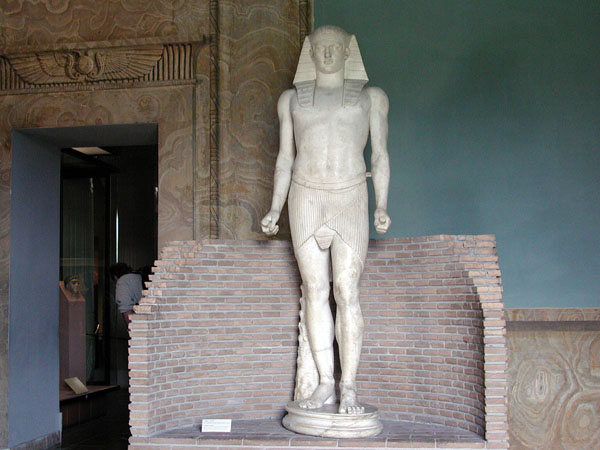
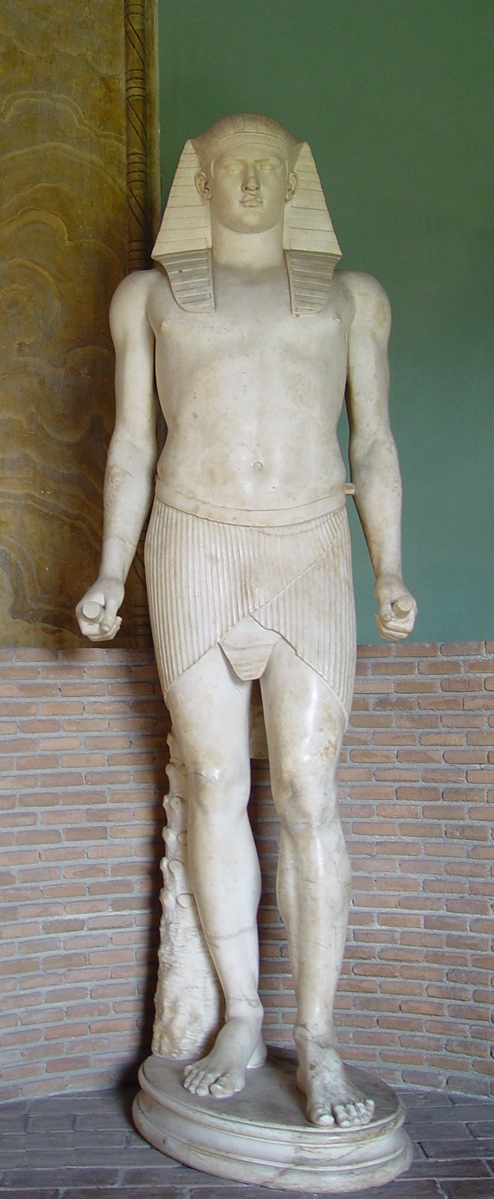
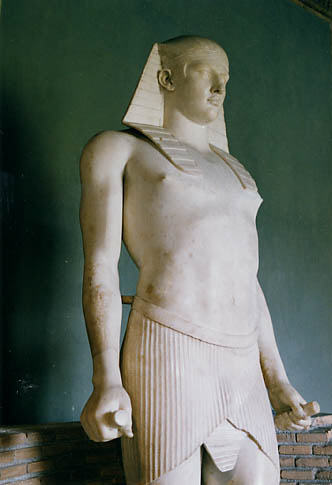
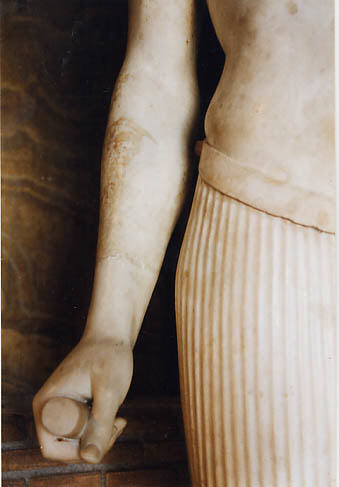
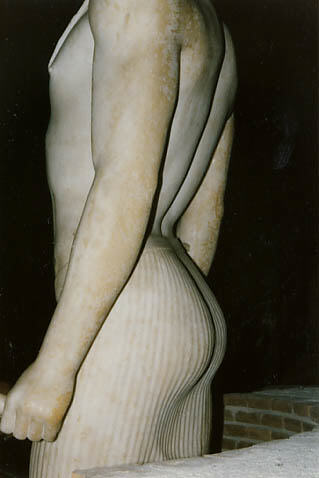
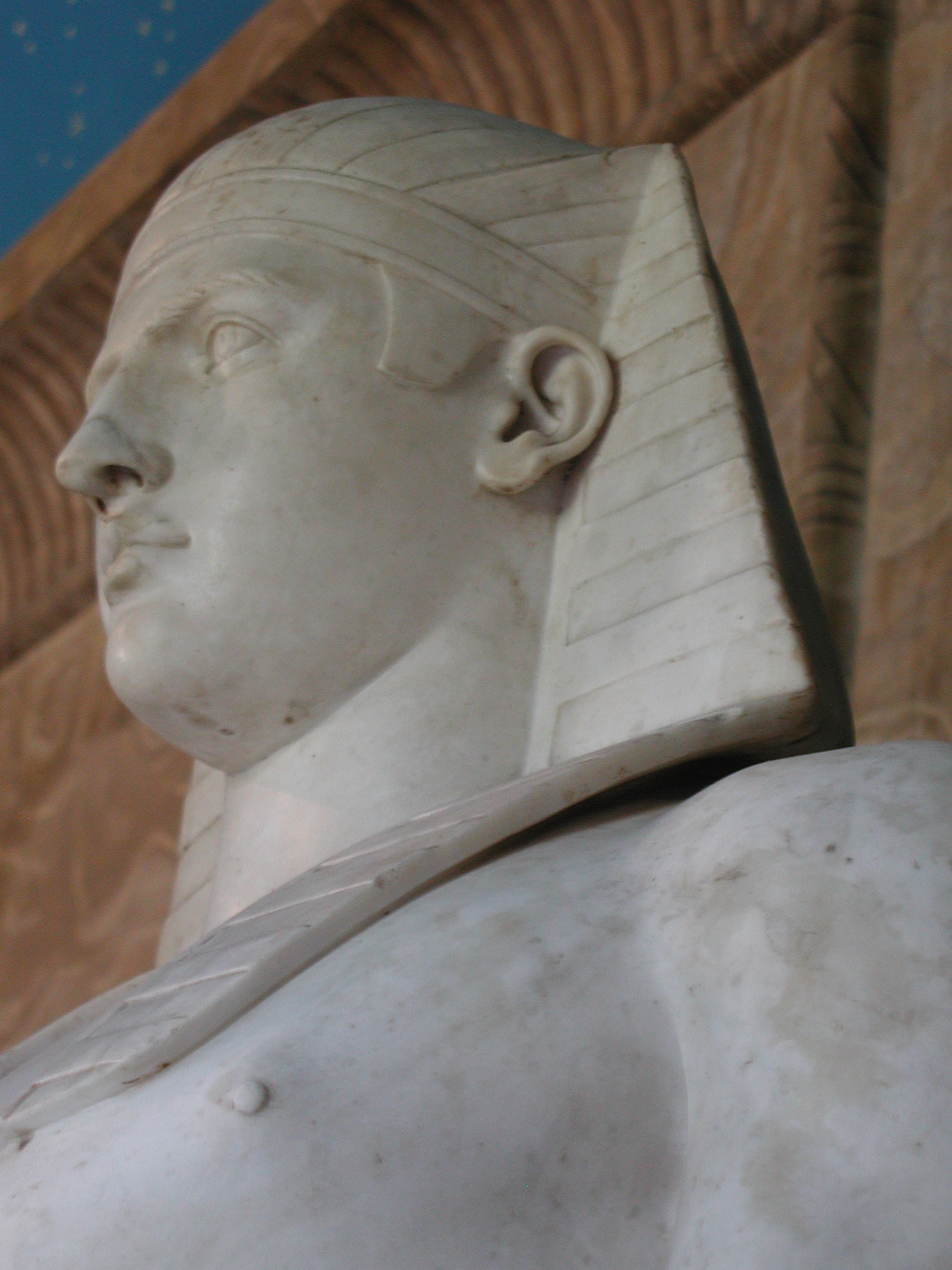
Vatican, Museo Gregoriano Egiziano, Inv. No 22795, exhibited in 3rd Room. It is now believed that, at Hadrian’s time, a set of ten marble statues of various sizes and colours, all representing Antinous in Egyptian guise like this one, decorated the niches of the ‘Serapeum’ of the ‘Canope’ of the Villa Hadriana. This one, the most spectacular, was found in 1739. Its (few) restorations are attributed to Filippo della Valle [1697-1768]. Acquired in 1742 by Benedict XIV [1675-1740-1758] for the Capitoline Museum. Identified as Antinous in 1761 by Johann Joachim Winckelmann [1717-1768]. Exhibited in the very middle of the ‘Salone’ of the Capitoline Museum until seized by the French troops on the ground of the Peace of Bologna (1796), it arrived in Paris in July 1798 and was exhibited in the Louvre (then ‘Musée Napoléon’) from November 1801until the collapse of the Napoleonic regime.
Returned then to its proprietors, it came back to Rome in January 1816 and was exhibited again in the Capitoline Museum, albeit in another room, later called ‘Room of the Dying Galate’. Handed over to the ‘Museo Gregoriano Egiziano’ inaugurated in February 1839 by Gregory XVI [1765-1831-1846], the statue was exhibited in the 3rd room where it still stands today. The two pictures at the top left show the statue before the rearrangement of this room in the mid-1980’s.
«Scultura eccelente, e così fresca, che pare essere fatta in questi nostri giorni»
(Francesco de Ficoroni, 1744)
Two Last pictures © by
Bill Jennings
(Flickr.com)
Copy of the Egyptian Antinous of the Vatican
Vatican, Museo Egiziano, Inv. N° 36464, Barberini Antinous, exhibited in 3rd Room. Because of the similarity with the upper statue, one suspects that it is also an Antinous.
Vatican. Museo Egiziano, exhibited in 3rd Room. Antinous Osiris. Replica of the statue once in the Villa Albani, now in Munich.
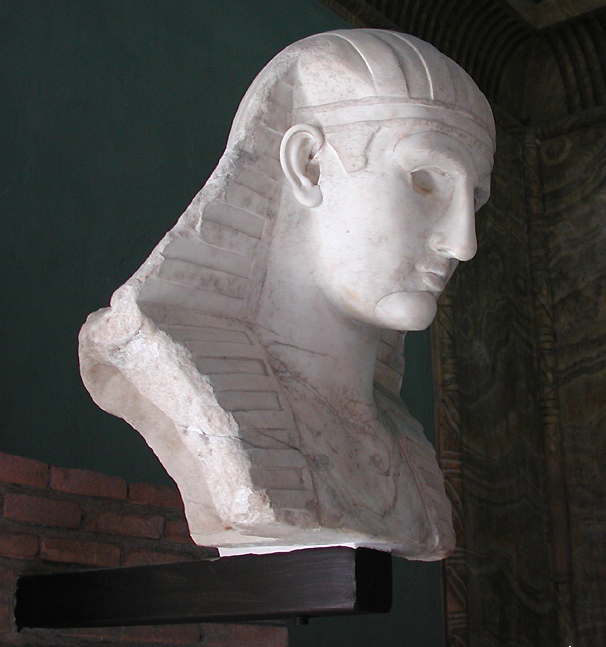
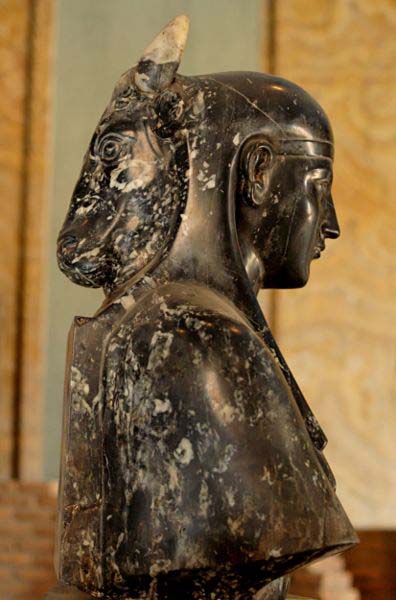
Vatican. Museo Gregoriano Egizio, Inv. N° 2170, exhibited in the Braccio Nuovo of the Vatican, from 1822 until 1989, since then in the 3rd Room of the Egyptian Museum. Bust possibly found in the “Pantanello” of the Villa Hadriana. In antiquity, the eyes were inserted with precious stones and the head, most probably, adorned by a lotus flower. Its identity is sometimes contested.
«Jugendlicher Kopf mit ägyptischer Kopfbedeckung, dem durch die Ergänzung Ähnlichkeit mit Antinous verliehen ist»
(Walther Amelung, 1903)
Vatican. Cortile del Belvedere. Inv. N° 102, exhibited. Head on non-associated statue. The provenances of both the statue and the head are unknown. The statue was acquired from Vincenzo Pacetti by the Vatican in 1804, possibly already restored with its present head ; alternatively, the head may have been added in 1807. Long taken for Bacchus, it was first recognised as Antinous at the beginning of the 20th century.
«Un dios pasivo e inexpresivo, con sus largos cabellos que desvirtúan la verdadera y característica cabellera del bitinio»
(Francisco de la Maza, 1966)
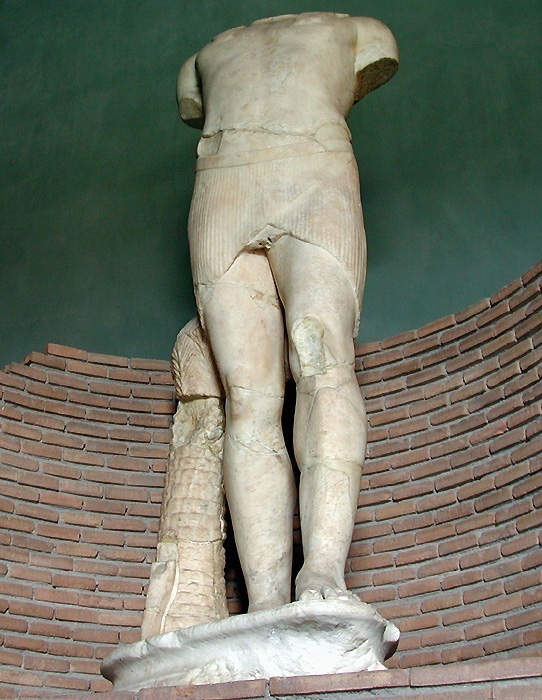
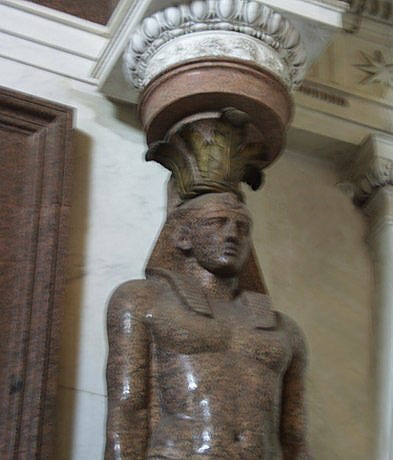
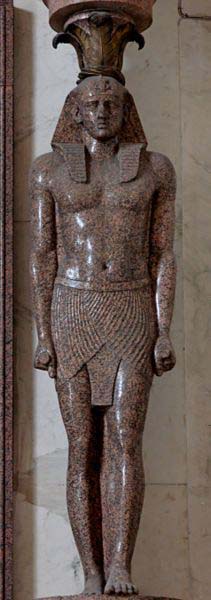
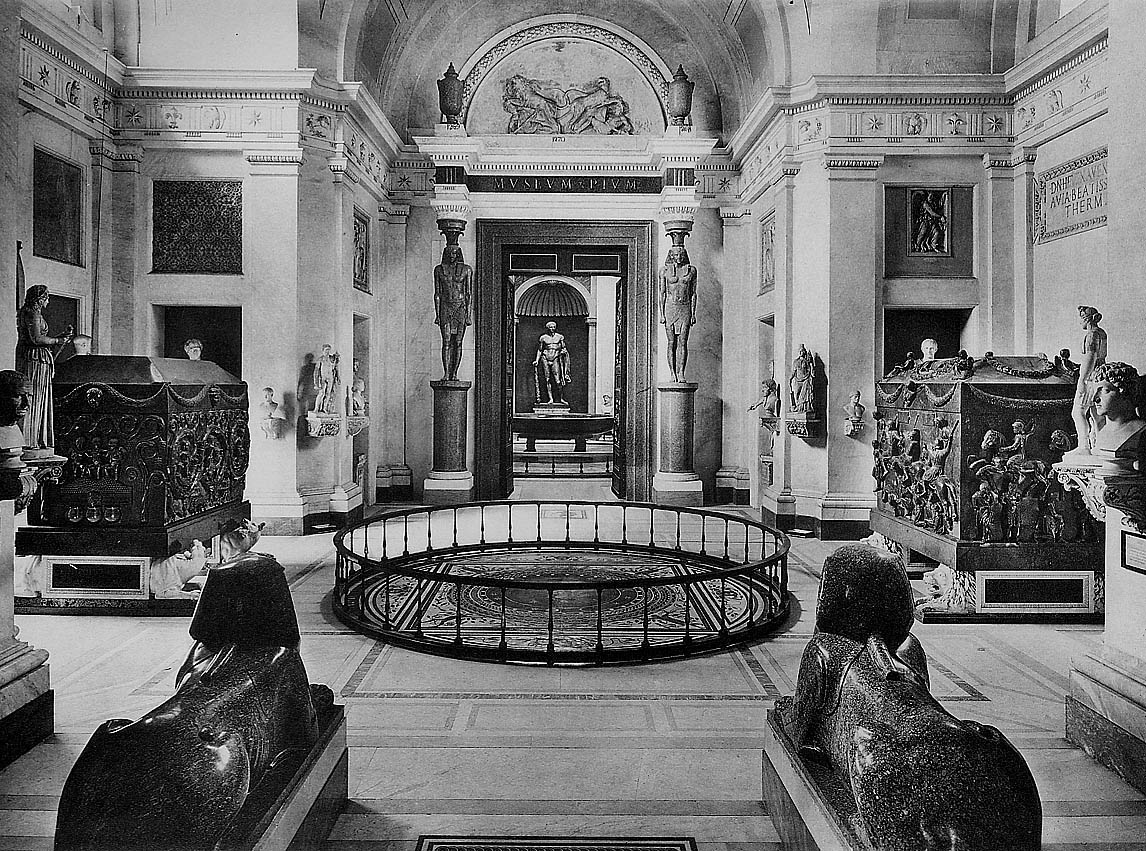
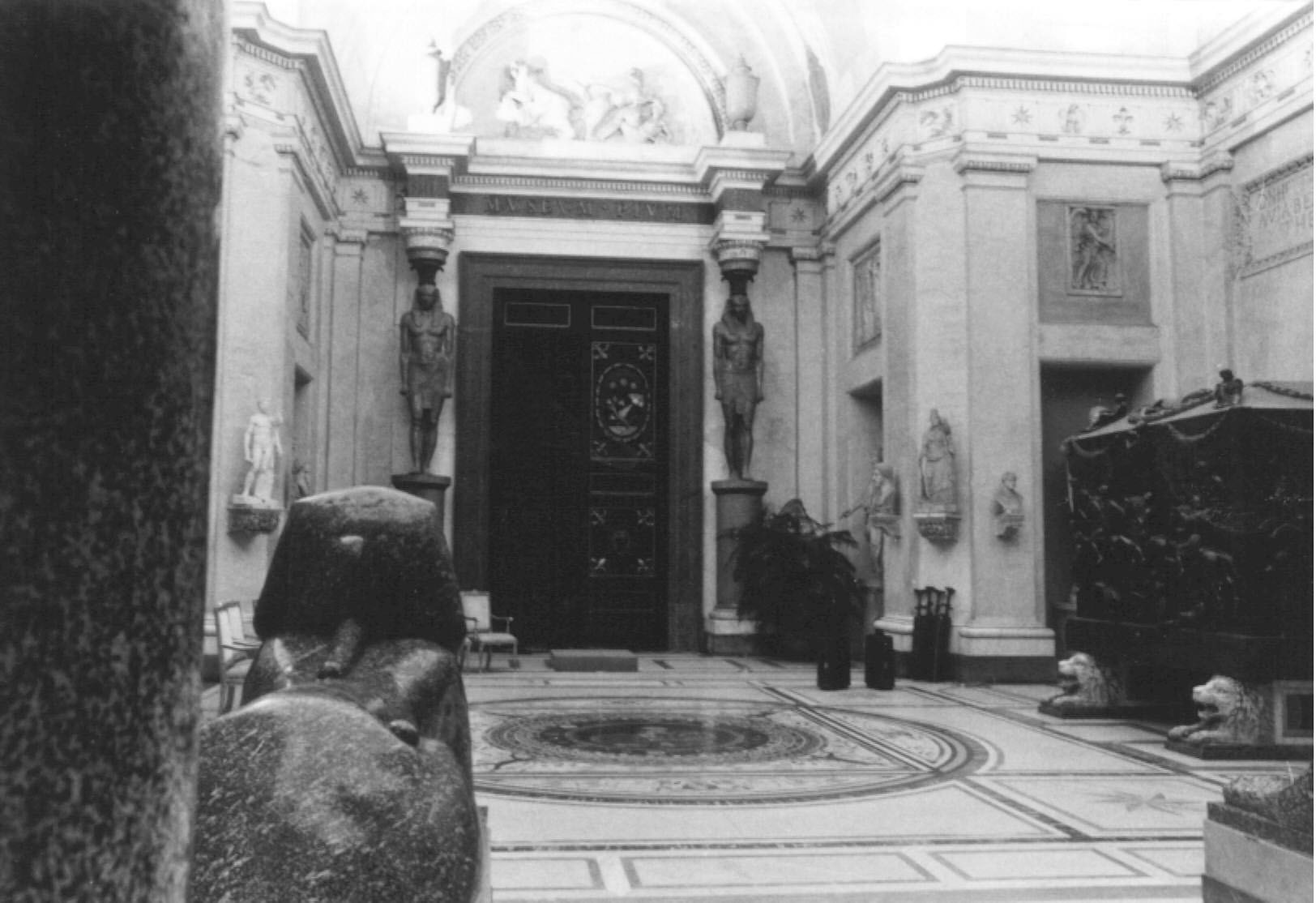
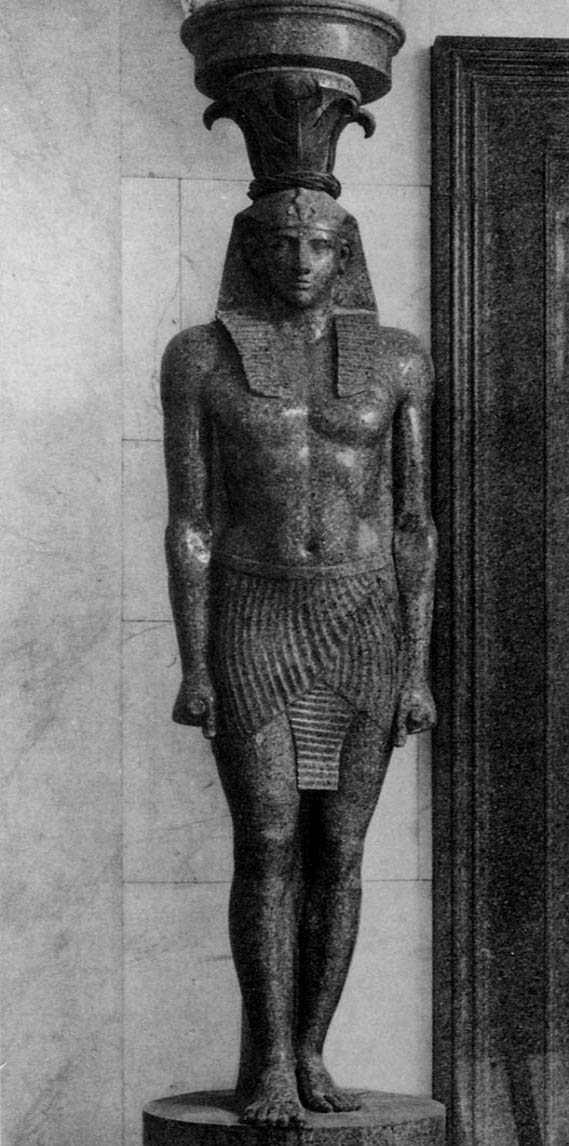
Antinous-Telamons, Musei Vaticani, Sala a Croce Greca, Museo Pio Clementino Inv. Nº 194. The two telamons, also known as "Cioci" or Antinous Telamoni, high 3.35, in oriental red granite or syenite brought from Aswan in Egypt, were found around 1450 in the Villa Adriana. The two telamons were placed at both sides of the entrance to the Palazzo Vescovile (Episcopal Palace) of Tivoli. The two statues remained in that emplacement until 1779, when Bishop G. Mattei Natali and the city council of Tivoli donated them to Pope Pius VI. The telamons were restored in 1780 by Gaspare Sibilla.
Vatican. Museo Gregoriano Egiziano, Inv. 22847 and 22849. Janiform bust of Antinous as Osiris-Apis (Serapis) springing from a lotus flower. ca. 131–138 CE. H. 50 cm (19 ½ in.). From the Serapaeum of the Canope in the Villa Adriana, near Tivoli, 1736. Photographer: Jastrow (2006)
Venice
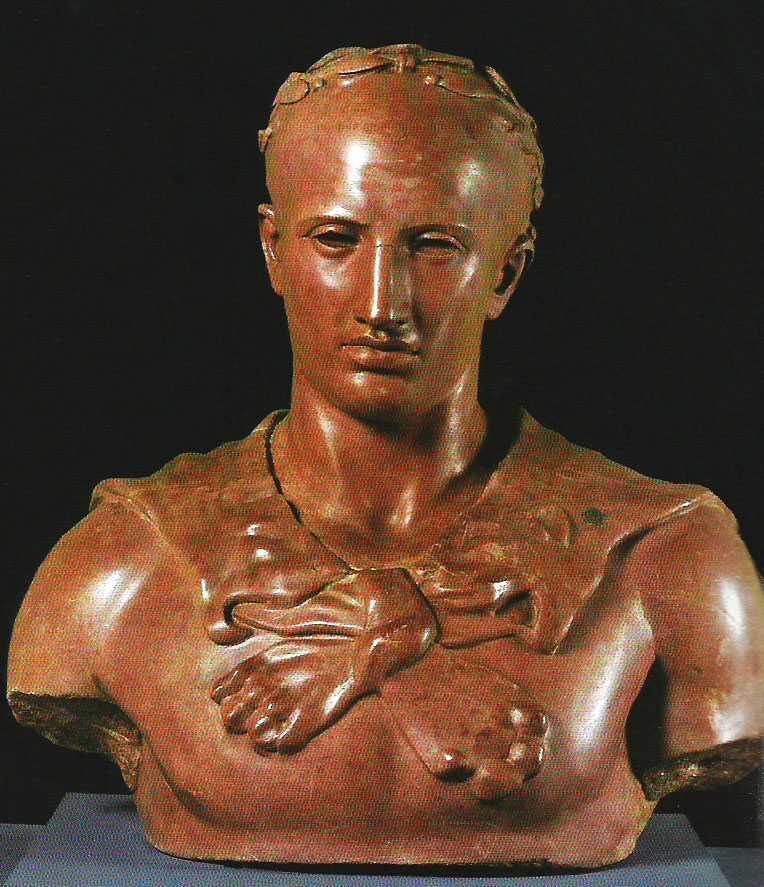
Venice, Museo Archeologico Nazionale. Pirro Ligorio (circa 1510 -1583) unearthed in the Villa Adriana in the area he named the Palestra three half figures in red marble, with the heads completely shaved, and wearing olive wreaths, which he interpreted as athletes. But Serena Ensoli Vittozzini has recently interpreted the busts as generic priests of goddess Isis or as busts of Antinous acting as priest of the cuIt of Isis. These heads are in the Roman Musei Capitolini, in the Museo Archeologico Nazionale of Venice and in the Pasisian Musée du Louvre.
Versailles
Versailles, Castle. Modern marble bust, formerly in the Royal Collections, exhibited today near the "Ambassadors’ Staircase".
Vienna
Vienna, Kunsthistorisches Museum, Inv. N° I.91, not exhibited. Origin unknown. Mentioned in Vienna in 1866.
«Kopf von jugendlicher Anmuth, reiner Schönheit und schwermüthigen Ausdrucke»
(Eduard von Sacken, 1866)
Voronezh
ENGLISH
Voronezh, I. Kramskoi Art Museum, Inv. 582 Ck. Marble, height 45,0 cm. First the property of Otto Friedrich von Richter, the bust was presented to the University of Tartu Art Museum in 1829 by Eduard von Richter and stood there until 1915. Then at Voronezh State University Museum of Art and Archaeology from 1918 to 1933, and since then at its present location. The upper part of the head is missing and was reattached as a separate piece. Missing bits : left hear, a few curls on the forehead, most of the laurel wreath. Restorations : a large part of the neck and base, the nose and the upper part of the lip.
Warsaw
Warsaw, National Museum, Inv N° 148919. Acquired in 1930 from the collection Max von Heyl, Darmstadt. Previous provenance unknown.
Worcester (USA)
Worcester, Museum, Inv. N° 1971.88. Acquired 1971.
Unknown Private Collections
Private collection Dr. Bauer, found in Ephesos.
Private collection Dr. Bauer, from the Villa Hadriana.
Royal Athena Galleries Auction house, New York, London. Larger-than-life marble head. No further information.
Auktion François De Ricqlès, Paris, 2 Oktober 2000. Antinoos as Bacchus.
Auction, 1983, in Würzburg (Austria). Formerly collection De Clercq, Paris. Bust found in Syria around 1875.
Main Site
Previous Page
Next Page








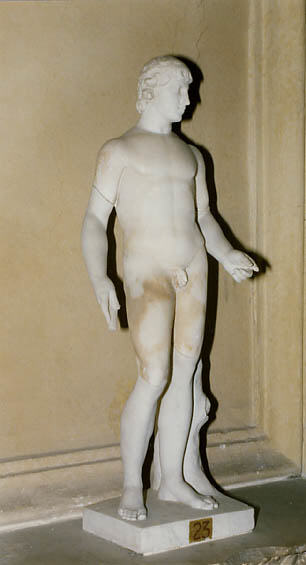
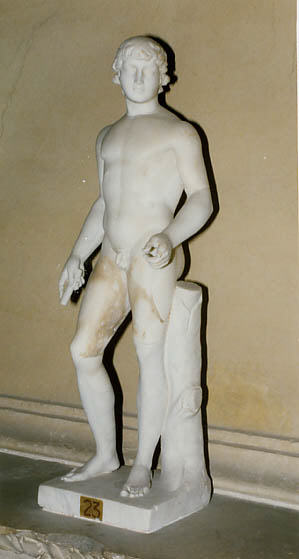





 Copy
of the Egyptian Antinous of the Vatican
Copy
of the Egyptian Antinous of the Vatican